Wednesday, September 10, 2008

2009 Volvo XC90

2009 Volvo XC90


The 2009 Volvo XC90 is a safe, comfortable and very functional family vehicle - and it's one of the most impressive, and successful, Volvo luxury SUV models ever manufactured. It rates well in fuel efficiency for its class yielding 14/20 mpg. MSRPs vary, trim and option-dependent, from $34,780 to $50,800. The 2009 XC90 comes with a basic warranty that stands for 48 months or 50,000 miles.

Beginning with the 2007 model, the XC90 was fashioned with a newly-designed grille, restyled bumpers and lights and enhanced under-hood hardware. A 3.2L 235 hp I6 engine provides smooth power and outperforms the previous XC90's 5-cylinder turbo. There's also an optional V8 upgrade that yields 315 hp and a lot of quick-accelerating thrills. Attractive styling inside and out make pleasant travels for up to seven passengers and the cargo area will accommodate more gear and luggage than nearly every competitor.

A full-time AWD system takes you and yours through cold seasons and tough terrain with simplistic ease. In the case that you have no need for this added ability, the XC90 from Volvo also comes in a FWD model. As is the Volvo standard, the XC90 is highly rated for safety. The protection of all occupants, not just the driver, are one of the Volvo characteristics that keeps them famous. The Roll Stability Control system goes miles to prevent rollovers while the Rollover Protection System is firmly in place to protect all passengers in the actual event of a rollover. Additionally, the entire roof is manufactured from solid, high-strength steel.

Also, since 2007, the XC90 features the BLIS system (optional) that continuously scans possible blind spots for unseen vehicles in the surrounding areas. Volvo takes your family's safety very seriously and continues to create innovative, industry-leading safety initiatives. The 2009 XC90 is a large, tough and fresh luxury SUV that loves adventure. The handling is precise and responsive. The engine performance (especially with the V8 option) is powerful and exciting. Still, the overall appearance is quite conservative offering few clues as to what really lies within.

On the inside, passengers and driver alike are afforded the style and elegance that one would expect from a vehicle in the XC90's price range. The engine is mounted across the chassis in order to maximize interior volume. There is great flexibility packed inside of the XC90's relatively compact exterior. You can take 2 or 3 rambunctious teenagers for a cruise and they will actually have a difficult time misbehaving. (It helps that they are easily distracted by the flip-down rear DVD screen.)

Once you take the small step up into the cockpit, the XC90 rewards you with an informative and well-designed driving experience. There is an air of spy-like exuberance as you take your seat at the helm. A comprehensive readout panel sits conveniently for you to gather all trip and vehicle information from at your whims. Every element is well-thought and well-placed. Overall, the 2009 Volvo XC90 will exceed your expectations and hopes. Volvo continues to lead the planet in terms of safety, style and dependability.
source: www.carseek.com
>Reviews of new developments in the world of carsslim fast well,

Wednesday, March 26, 2008

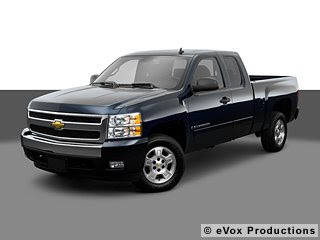
2008 Chevrolet Silverado

Chevrolet Silverado 1500 Long Bed Extended Cab Pickup Grill

Introduction
Chevy Silverado HD heavy-duty pickups are about real work and serious play. The 2500-series is often used like a second car and charged with pulling the boat or trailer on weekends, while the 3500 usually sees hauling and pulling duty on a routine basis and tows fifth-wheel RVs and six-horse trailers. With a trailer of 5,000 pounds or less, or infrequent carriage of building materials, you'd be better served with a Silverado 1500.

But for those who need it, the Silverado HD models are the only heavy-duty pickups with independent front suspensions on four-wheel-drive units, for better ride and steering than the competition. The 6.0-liter gas V8 is the strongest standard engine, and the 6.6-liter is the most powerful turbodiesel. The standard six-speed automatic one-ups the competition and only GM includes OnStar. It is well finished, inside and out.

After a mid-2007 debut for the new Chevy Silverado HD, the 2008 models get some minor yet worthwhile upgrades. These include brighter instrumentation, 17-inch wheels on dually models, standard XM radio with three-month subscription. Regular Cab pickups offer a power front bench seat option, split 40/20/40.

A choice of interiors is available, with different dashboards rather than merely varied finishes. You can have it sweep-out simple, or served up with heated leather, navigation, and an expensive-looking opaque shade for the moonroof. Regular cabs are roomy enough for three, extended cabs are ideal for younger families and have a thoughtful new rear door design, while the crew cab is suitable for four or five big athletes or pony-sized dogs.

The Silverado HD is the most car-like of big pickups, whether referring to interior appearance or driving feel. Yet it carries and tows as well as other heavy-duty pickups. With close to 100 derivatives in cab/box/trim/drive choices and option sheets to fill many pages, there should be an example to fit your tastes and requirements.

Lineup
2008 Chevy Silverado HD pickups are offered in 2WD and 4WD versions. Three cab styles are available, Regular Cab, Extended Cab, and Crew Cab, along with two box sizes. They come in 2500 (3/4-ton) and 3500 (1-ton) versions; the 3500-series is available in single-rear-wheel and dual-rear-wheel versions. Cab and chassis models, suitable for fitting a custom work or tow body on, are also available.

Trim levels vary from vinyl-floored Work Truck models through LT to plush LTZ, the latter using a unique interior design.

The basic WT comes with six-speaker AM/FM/XM stereo, ABS, air conditioning, tire pressure monitors, 40/20/40 vinyl front bench with armrest, and six-speed automatic with tow/haul mode and dual overdrives.

LT versions are split in 1LT and 2LT by package. To a WT the LT adds auto-dimming mirror and compass, cruise control, driver lumbar, locking seat cushion storage, leather-wrapped steering wheel, electronic shift 4WD, and chrome wheel trim. At about $1800 the 2LT upgrade adds better upholstery, power-adjustable front seats, fog lamps, and audio controls on the steering wheel.

Top trim LTZ includes an upscale dashboard design, Bose audio system with subwoofer, locking differential, remote start, leather upholstery with 12-way power and heated seats in front, two-person driver memory, trailer package, 17-inch aluminum wheels, and heated windshield washer fluid system.

The standard engine is an iron-block 6.0-liter V8 with variable valve timing and 353 hp; on duallies (GVWR less than 10,000 pounds) the engine is de-rated to 312 hp. The Duramax diesel, at 365 horsepower and 660 pound-feet of torque, is optional ($7195) and comes with the Allison six-speed automatic transmission ($1200).

Variety characterizes the Silverado option palette, with working gear such as integrated trailer brake controller, dual alternators on diesels, remote start, and snow plow prep package to luxury features like satellite radio, heated seats and a moonroof. Many options are interrelated so check everything carefully.

Safety equipment includes frontal airbags, front seat belt pretensioners, ABS, and OnStar.

Walkaround
For this generation the Chevy Silverado and GMC Sierra do not share near-identical appearance. Lamps and trim vary but so do fenders, boxes and the hood; mechanical bits are shared. Dual-rear-wheel pickups have a hydroformed sheetmetal pickup box with integral overfenders and better paint finishing.

With the big chrome crossbar and bow-tie logo the Silverado HD heavy-duty pickup is immediately recognized as a Chevrolet and maintains visual relationships to the Silverado 1500 light-duty pickup. The hood could have been drawn by a snowmobile designer, with upswept shelves at the sides ending in plastic trim louvers (that serve a vent function on diesels) and Vortec (gas) or Duramax (diesel) badging. Label the look evolutionary refinement rather than a design revolution.

Useful features include an optional tailgate lock and lift assist, dual-element towing mirrors, a cargo management system with multiple adjustable tie-down points (500 pounds per) and a wealth of dealer-supplied toolboxes, and a 2.5-inch receiver hitch capable of towing 13,000 pounds on the top-rated models.

The Silverado HD matches up against other heavy-duty pickups in most dimensions as they all carry the proverbial 4x8 sheet of plywood flat in long-box models. However, the Silverado tends to have a lower roofline and high load deck, especially on 4WD models, worth noting if you visit commercial garages or have a low door at home.

2008 Chevrolet Silverado

Interior

Regardless of cab size the Silverado HD offers two distinct styles inside: Pure Pickup, which is what you historically expect in a truck, and a Luxury-inspired version that essentially duplicates a Tahoe or Suburban. Either level is a marked improvement over the previous generation, as even the faux wood trim is well-done and the cabin is squeak and rattle-free.

For recreational towing the luxury version may be the choice, but the pure pickup level gives up nothing in build quality, function (it has a second glovebox, the luxury does not) nor appearance.

We did note interior color has an effect on how inviting any version is.

Seats are supportive and are easily adjusted. Adjustable pedals and tilt wheel are available. The steering wheel is offset slightly from the seat center, however, which may fatigue your shoulders or upper arms on long drives. Those truckers who add myriad lights and accessories will note a lack of dedicated switch blanks while others will appreciate the cohesive design.

The Extended Cab back seat is suited for smaller adults and kids. For better access, the side doors swing 170 degrees for easier loading in tight parking spaces. And the windows in those small doors now roll down (completely) for more comfort and venting options. The moonroof cover is a solid material on most trim levels. The luxury version has a semi-transparent shade that might require a baseball cap in bright conditions, not our favorite feature.

All controls are plainly laid out, the only nitpick being the number of similarly shaped and sized black buttons, some of which large-fingered individuals might find hard to push without hitting the adjacent one by mistake. Instrumentation is complete, responsive, and easier to see at a glance for 2008. Dual-zone climate control supporting a side-to-side delta of 30 degrees (Fahrenheit) is offered on many models (diesels get a fast warm-up function), and the navigation system is available only on LTZ models. Turn-by-turn navigation instruction is included with the standard OnStar, but once past the introductory time frame OnStar has a monthly service charge.

Of the heavy-duty pickups, the Silverado is the most car-like inside and will consequently find favor with many buyers. Visibility is good because you're nearly six feet off the ground, though the large hood and lower dash present an imposing view forward. The higher box sides haven't compromised rear visibility, and the new towing mirrors are a big improvement.

Driving Impressions

The current Chevy Silverado HD boasts marked gains in ride quality over the previous-generation versions. It is the most car-like of the big pickup trucks.

That said, an HD Silverado drives heavy, as in a solid feel and deliberate control inputs. It is confident empty or with a maximum load on board, and the added frame stiffness and body build quality mean there is much less sensation of a separate cab and box. They are, of course, still separate pieces, but you don't feel like you're being tossed between two camel humps. Pogo-sticking or bobbing is dependent on road surface and wheelbase and ultimately hard to avoid everywhere, but such motions are now well-controlled and unlikely to redistribute improperly secured cargo.

The HD is a serious truck, designed to carry anywhere from a ton up. The steering is heavily weighted, as is the throttle, perhaps to remind you there is much weight under your control, and the amount of precision is directly related to which type of tire you have: street or all-terrain.

The Silverado has slightly crisper steering response than the competition for three reasons: One, it tends to ride closer to the ground for a lower center of gravity. Two, it tends to be a bit lighter up front, especially comparing a gas Silverado to a V10 gas Ford. And third, the Silverado uses torsion-bar independent front suspension on two- and four-wheel drive models, where the Ram and Super Duty use a heavier, live front axle on 4WD models. The areas where some of the competition deliver a better ride are those with small bumps and irregularities where their larger tires soak up more, and in empty dually configurations; the Silverado does not kick more in the back, but it is noticed more because the front is more relaxed.

Brakes are all vented disc with ABS and plenty stout to handle the load or aggressive driving.

For 2008, an integrated trailer brake controller is available to slow your trailer much more comfortably and more controlled than an aftermarket controller can. (Like Ford's system, however, it is not compatible with all the electric-hydraulic disc brakes becoming more common on high-end RVs.)

A 2.5-inch receiver hitch is available on 2008 models that allows conventional trailer ratings to 13,000 pounds, eclipsing many competitive offerings; the maximum for fifth-wheel trailers on properly equipped Silverado HD models is 16,700 pounds. The strongest Silverado HD will haul 23,500 pounds of truck, cargo, and trailer.

The new 6.0-liter V8 gas engine employs variable valve timing to widen the power curve. It generates 353 hp in lighter models and 312 hp in heavier models, with 373 lb-ft of torque at 4,400 rpm in either case. That's about the same horsepower as the old big-block 8.1-liter V8 but down 80 lb-ft on torque, so a new six-speed automatic is used to make up for the deficit.

And it makes up fairly well, smoothly and quietly propelling the truck on daily chores. It will tow, but grades will have it working above 3500 rpm and since it's providing essentially the same propulsion as an 8.1-liter with four-speed automatic, it will use nearly the same gas doing so. The Tow/Haul mode works exactly as it should, as does the tap shift manual control, and were we making a habit of driving around with more than 12,000 pounds in truck, cargo, or trailer, we'd spend the big bucks on the diesel.

The Duramax turbodiesel and Allison six-speed automatic adds only a small bump in horsepower but nearly doubles torque to 660 lb-ft at just 1600 rpm, and truckers and engineers alike will tell you horsepower is irrelevant for getting a load moving. Additionally, the turbocharged diesel will lose only a fraction of the horsepower the V8 loses at altitude, important when towing trailers through the Rockies. The diesel will deliver 25 percent to 35 percent better fuel economy (maybe more if you work them both hard), and it runs so clean that diesel tailpipes remain steel-colored inside while the gas engine pipes go black.

Summary & Specs
The Silverado HD is an ideal choice for those who want big pickup workability with less of the cumbersome feeling occasionally associated with large trucks. It can be dressed down for work or dressed up for those who spend a lot of time in it. For the first time, the diesel is at least as environmentally friendly as the gasoline engine. It is ready, willing and able to work.

G.R. Whale filed this report to NewCarTestDrive.com from Los Angeles, California.
source: www.automotive.com

Tuesday, November 13, 2007

2007 Buick Lucerne


The Buick Lucerne is the brand's flagship sedan. Its clean lines are suggestive of fine European imports yet maintain Buick traditions. Inside, Lucerne is elegant, comfortable and easy. Underway, it's smooth and quiet; but with precise steering and a chassis that handles winding roads with aplomb. we find the Lucerne to be a plush, highly competent full-size sedan at a compelling price.

The Lucerne CXS is certainly the most enjoyable of the new Buicks to drive, thanks to its powerful V8 engine and Magnetic Ride Control, an adaptive sports suspension developed for the Corvette. Yet we might opt for the Lucerne CXL V6, a very enjoyable car to drive, with agile handling and plenty of performance. The V6-powered Lucerne CXL is positioned to compete against the Toyota Avalon and Lexus ES 330, while the V8-powered CXS aspires to the Lexus GS and Infiniti M luxury sedans.

As it has done from time to time throughout its 103-year history, Buick is rethinking, renewing, revising and rationalizing its model lineup. The Buick Lucerne replaced the Park Avenue and LeSabre when launched as a 2006 model. The Lucerne benefits greatly from the structure and chassis hardware that it shares with the recently launched Cadillac DTS. In this, Lucerne is not breaking tradition but confirming it. The biggest Buicks have shared body structure with Cadillacs since the 1930s, if not before; and they have shared significant chassis pieces since 1965.

Lineup
The 2007 Buick Lucerne is offered in three trim levels.

CX ($25,515) comes with a 3.8-liter V6, four-speed automatic transmission, cloth seats for five people, a power driver's seat, power windows, power door locks, manually operated heating and air conditioning, AM/FM/CD with six speakers and steering wheel audio controls, cruise control, remote keyless entry, and 16-inch aluminum wheels. Six-passenger seating is available by ordering the front bench seat ($295). A Comfort and Convenience package ($795) adds an electrochromic rearview mirror, Universal Home Remote, illuminated visors with vanity mirrors, intermittent front wipers with Rainsense, and body-colored outside mirrors with power adjustment and heat. The Driver Confidence Package ($795) includes rear park assist, remote vehicle start and theft alarm.

CXL is available with the V6 ($28,530) or a 4.6-liter V8 ($30,540). Either way, CXL upgrades with leather seats (for five or six passengers), a leather-wrapped steering wheel, a power passenger's seat, dual-zone automatic climate control, and 17-inch painted aluminum wheels. The suspension is tuned a little tighter and includes Airlift rear shocks for automatic level control. All items from the Comfort and Convenience package (see above) are also standard. The CXL V8 adds GM's Magnasteer magnetic assist steering, with a faster ratio; and firms up suspension damping a little further. To help maintain better control in adverse conditions GM's StabiliTrak electronic stability control system is available as an option on the CXL V8 ($495).

CXS ($34,545) comes standard with the V8, 18-inch wheels, StabiliTrak, Magnasteer, and Magnetic Ride Control for the best handling available in a Lucerne. CXS also has upgraded leather seats with eight-way power and memory for driver and front passenger. Audio is a nine-speaker, 280-watt Harman Kardon setup with standard XM Satellite Radio.

Options for the Lucerne include heated/cooled front seats; heated leather-wrapped steering wheel; factory-installed remote start; Ultrasonic Rear Parking Assist; rain-sensing windshield wiper system; the first heated windshield washer fluid application in its class; six-disc in-dash CD changer with MP3 capability; and a satellite-based navigation system, now with touch-screen capability.

Safety features include six airbags: a dual-stage driver's front airbag and a dual-depth front passenger bag, front-seat side-impact airbags, and full-coverage side-impact curtain airbags. The front seatbelts come with pretensioners, so be sure to wear them. Traction control, anti-lock brakes, and a tire pressure monitor are standard on all models. OnStar comes standard and includes the first year of Safe and Sound service; OnStar operators will dispatch rescue crews if your airbag deploys and you don't respond to calls, a great feature for you and the rest of your family. The first-ever application of a dual-depth passenger airbag has two sections; a smaller section deploys in a less severe crash or if the passenger is small or seated nearer the dashboard. In a bad crash or if the passenger is not wearing their seat belt the full bag deploys for maximum effect.

Walkaround
There is no mistaking the Lucerne for anything but a Buick. The Lucerne has a handsome appearance with a good stance thanks to its long wheelbase and wide track. The classic Buick waterfall grill blends in well with the large integrated headlamps. The side profile, with its steeply raked windshield, is reminiscent of several recently introduced European sedans such as the VW Passat and Audi A6. The rear of the Lucerne features a high trunk line with nicely integrated tail lamps.

Chrome trim is kept to a minimum. The only stylistic link to Buicks of old is the row of small portholes on each of the front fenders. They are also the only clue to what's under the hood: the V6-powered Lucerne gets three portholes on each side while V8-powered models get four on each side. Flashback to the Fifties, when more powerful Buicks had more holes. But they didn't serve any real function then, and still do not today. Still, we like them.

Two new exterior colors, Light Quartz Metallic and Gold Mist Metallic, are available for '07.

The Buick Lucerne is built on the same mechanical platform as the Cadillac DTS, which was also all-new for 2006. Now in its second year of production, deemed the sweet spot for some buyers, the Lucerne benefits from the newest techniques for building a quiet luxury car.

These include hydroformed frame rails for a stiffer body and use of laminated steel with plenty of sound deadening material placed in strategic locations. Buick engineers shaped the outside of the door mirrors to lessen wind noise. Laboratory test results show that the Lucerne is quieter than a Lexus ES 330. This was also evident in a back-to-back driving comparison.


Interior
Much like the exterior, the Lucerne's interior is cleanly designed with just enough touches of wood and chrome trim to make it luxurious without being opulent. The dashboard is fairly traditional in design with a smallish instrument pod containing three round gauges in front of the steering wheel.

The center stack is located high up for easy access, and contains large knobs for operating the climate control and audio system.

Standard on all '07 Buicks is OnStar with Turn-by-Turn service, which allows customers to talk to a live advisor, who in turn downloads complete step-by-step directions to the vehicle through the OnStar system. Audio directions are then automatically played through the vehicle's stereo as they are needed, triggered by the OnStar system's GPS capabilities. Drivers can be directed to their destinations without having to take their hands from the wheel or eyes from the road.

And a touch-screen navigation system that can display a map is also available.

Buyers who want seating for six can order a traditional front bench seat. Most people instead opt for bucket seats, which provide a good level of comfort and come with an armrest in the center console.

Rear-seat passengers are well taken care of with good headroom and excellent leg room. The long wheelbase also allows for a wider-opening rear door with almost no intrusion from the wheel well, making it easy to get in and out of the car.

Driving Impressions
The Buick Lucerne is a smooth but spirited car. The ride quality is excellent, thanks to its long wheelbase and stiff body structure. In back-to-back driving along a stretch of less-than-perfect road, we found the Lucerne's ride quality comparable to that of the benchmark Toyota Avalon. Buick loyalists who are used to a cushy ride will not complain about the Lucerne. It might be stiffer than they are used to, but it's still plenty smooth.

The steering is precise and responsive, and the suspension is well controlled, even at high speeds along not always smooth roads. After driving Buick Lucerne models over the course of several hours, winding among the vineyards in the Santa Ynez Valley just north of Santa Barbara, California, we found the Lucerne handles with aplomb, exhibiting no wallowing or causing any untoward moments. A rigid chassis is the key to balancing sharp handling with a smooth ride, and Lucerne really delivers.

The CXS comes with Magnetic Ride Control, which we found improved the handling a bit, though the differences were not dramatic. Magnetic Ride Control is an adaptive damping system designed to enhance overall ride performance. With Magnetic Ride Control, the shock absorbers are filled with a synthetic fluid in which magnetically charged particles are suspended. By applying electric current to the particles, a computer continuously adjusts the fluid's viscosity according to varying road surfaces and driving styles. The system, which first appeared on the sporty Cadillac XLR, and then the Corvette, delivers a quicker response than earlier adaptive-damping setups that continuously adjusted the shock absorbers' main valves.

Indeed, when we tried a CXL V6, we were pleasantly surprised at just how well it performed. With the lighter V6, the Lucerne seemed more agile on twisty roads. The front end felt a bit lighter. The V6 models also suffer less from torque steer, a slight tugging felt through the steering wheel when turning and accelerating at the same time. As an additional benefit the V6 Lucerne is rated as a Super Ultra Low Emissions Vehicle (SULEV). The V6 is EPA-rated 19/28 mpg city/highway, while the V8 is rated 17/26 mpg.

So which model? If you don't demand instant power when accelerating away from traffic lights or merging onto freeways, the V6 is probably a better bet because it costs less and gets better fuel economy. We were pleased with its performance. However, GM's excellent StabiliTrak electronic stability control system is available with the V8 models, which improves driving control by reducing the chance of skidding. StabiliTrak is well worth having. And this car performs well with a modern double overhead-cam V8.

Summary & Specs
The Buick Lucerne is an attractive near-luxury car offering looks, features, quality and value. If you like a modern, comfortable ride with competent road manners, the Lucerne, with either a V6 or V8 engine, is well worth consideration. It comes with a longer warranty (4 years/50,000 miles) than Buick has offered in the past, and Buick has been doing quite nicely in recent J.D. Power and Associates surveys on product quality.

NewCarTestDrive.com correspondent John Rettie files this report from Santa Barbara, California.
source: www.automotive.com

Friday, October 26, 2007

BMW's Z4 Gets Its Props

BMW Z4

Spring is upon us and with it the season when a car buyer's thoughts turn to convertibles. For me, that means it's also a good time to say a few kind words about the BMW Z4 Roadster, a great little ragtop two-seater that has never gotten the sales or critical acclaim it deserves. Until recently, at least.

In terms of increased sales, the Z4 is the hottest-selling BMW in the U.S. market so far this year, though admittedly from a small base. Sales of all Z4 models combined soared 90.6%, to 1,906 units, in the first quarter of the year vs. the same period in 2006, partly driven by the addition of the new Z4 Coupe to the lineup. But what I find encouraging is that the plain old Z4 Roadster saw a 68% sales increase during the quarter, an early indication that consumers may be wising up to the fact that this is a much better car than auto reviewers have rated it. If you're looking to splurge on a midlife-crisis car this spring and have a fair amount of money to spend, the '07 Z4 definitely merits a test drive.

One thing I like about the Z4 Roadster is what many reviewers revile it for: its looks. Perish the thought, but the Z4 actually looks different from all the other cars on the road. The Z3, the model the Z4 replaced, had a classic, almost retro, look to it, while the Z4 is perhaps the most unabashed example of BMW designer Chris Bangle's "flame surface" styling, in which the car's sheet metal is sculpted to have multiple surfaces reminiscent of a flickering flame. Adding to its distinctiveness, the Z4 has an extra-long front end and a stubby, humped rear end with an odd little ducktail on the rear deck.

In an age of curvy, rounded vehicles that all look alike, the Z4 is instantly recognizable when you see it coming down the road. But it's a love-it-or-hate-it sort of design that has turned off many BMW aficionados. There are persistent rumors that Bangle's protégé, Adrian van Hooydonk, who became chief designer for BMW's car company when Bangle moved upstairs to oversee design for the entire BMW Group, will redo the Z4 for the '09 model year and give it a less radical design. I hope Z4 sales will continue to soar—proving that Bangle's bold design isn't a detriment to the model's commercial prospects.

Exterior styling aside, the Z4 Roadster is a classic sports car—quick, tight-handling, and with a catlike grip on the road. The engine lineup was also upgraded as of the '06 model year, so all versions of the car have plenty of power.

Like any BMW, it isn't cheap. The basic 3.0i, which is powered by a 3.0-liter, 215-hp, inline six-cylinder engine, starts at $37,175, while the more powerful 3.0si, which has a 255-hp, inline six, starts at $43,175. If you prefer a hardtop, the Coupe version of the Z4 3.0si starts at $41,175. And if blinding speed is your priority, the M version of the Z4—which has a 330-hp 3.2-liter engine—starts at $53,875 for the ragtop and $51,875 for the Coupe (see BusinessWeek.com, 7/26/06, "Hard Core Z4").

However, my feeling is that if you want a classic ragtop sports car, you don't necessarily have to spend a lot of money going for the biggest engine and adding bells and whistles to the Z4. You buy a sports car mainly for handling, not raw speed. And going with the entry-level Z4 is a little like going with the BMW 328i rather than the 335i: You give up a little speed and save a lot of money (see BusinessWeek.com, 10/17/06, "BMW's Super Coupe").

If my own money were on the line, I'd go with the basic Z4 3.0i, and about the only option I'd pay up for is the $3,550 Premium package, which includes an automatic convertible top, auto-dimming rearview mirrors, power seats, and a few other add-ons. If you want an automatic transmission, add another $1,275 to the price.

The bottom line is that you can get a well-equipped Z4 3.0i for a little more than $40,000. That's a lot of cash, but it's still thousands of dollars less than a Porsche Boxster.

You can even rationalize the purchase by telling yourself the Z4 is an economy car when it comes to gas mileage. The 3.0i is rated to get a respectable 21 mpg in the city and 30 on the highway. In a stretch of 200 miles of mixed driving, I got 22.6 mpg in a Z4 3.0i with an automatic transmission, which isn't bad considering how hard I pushed the car.
Behind the Wheel

Slip into the driver's seat and the Z4 is, unapologetically, a sports car. It has the small, spoked steering wheel that old-style European sports cars always had and a clean, uncluttered interior that contrasts sharply with its busy exterior styling. There isn't a lot of extra shoulder and head space in the cabin (unless, of course, the top is down), and legroom may be too tight if you're unusually tall.

The suspension is stiff and the ride relatively hard. If you don't want to bounce around on the highway and feel a hard thump when you hit a bump in the road, this isn't the car for you. You're also sitting very low to the ground in the Z4, and it's a struggle getting in and out, especially with the top up. But the seats are comfortable and more supportive than I remember the ones in the Mazda Miata being.

Like any classic sports car, the Z4 Roadster is a blast to drive. My test car came with the six-speed automatic transmission with a manual shifting mode and steering wheel-mounted paddle shifters. And this automatic is so refined that it makes you wonder how much longer even companies like BMW will continue offering stick shifts.

If you let the transmission do the shifting for you, it's incredibly smooth, running through the gears as if a professional driver were behind the wheel. The transmission never revs unnecessarily or hunts for the proper gear, even when you accelerate hard up a steep hill. At the push of a button, you can put the car in a sporty mode that noticeably alters the transmission's shifting algorithms and makes it quicker and jumpier.

If you're a real speed freak, the basic Z4 3.0i won't be fast enough for you. BMW rates it at 6.6 seconds in accelerating from a standing stop to 60 mph with an automatic transmission, and I clocked it at about seven seconds. That's noticeably slower than the 3.0si, which BMW says will do zero-to-60 in 5.7 seconds with an automatic and 5.6 seconds with a stick shift, but it's plenty quick for most people.

The 3.0i is geared to be very quick in the midrange and at normal passing speeds on the highway. When you get above 80 mph, there's not a lot of oomph left when you punch the gas, and the car starts to struggle a bit. If you want a real German-style autobahn cruiser, you need the extra power of the Z4 3.0si or the M. But for most normal U.S. driving, the basic Z4's power and speed are more than adequate.

As with any sports car, the Z4's interior is short on storage space. The glove box and storage bins in the doors are small. There's a box-like storage space in the back wall of the cabin big enough to hold a small purse. Happily, though, the trunk is quite big for a sports car and remains a relatively spacious 8.5 cubic feet even with the top down.

Speaking of the convertible top, I'd definitely pay extra for the optional power top, which is very handy. It goes up or down without human intervention in about 10 seconds. You don't have to worry about getting caught in sudden rainstorms because the top is so quick and easy to put up.
Buy It or Bag It?

For most people, buying a two-seater sports car isn't a rational decision; it's a splurge. And the key question always is: How big a splurge do you want to make?

If you're on a tight budget, there are tons of cheaper convertibles to choose from. The Mazda Miata (see BusinessWeek.com, 12/13/06, "Mazda: More Miata for the Money") is probably the most attractive low-priced alternative. General Motors' (GM) Pontiac Solstice (see BusinessWeek.com, 10/14/05, "Solstice: A Brawny Beauty") and Saturn Sky (see BusinessWeek.com, 5/30/06, "Sky High") are very cool-looking, but have the disadvantage of having virtually no trunk space when the top's down.

Closer to the Z4's price range but still considerably cheaper are the Nissan (NSANY) 350Z (see BusinessWeek.com, 7/09/06, "Z as in Zoom") and the Honda (HMC) S2000, both of which are sweet-handling cars. The Power Information Network figures the Z4 had an average selling price in the first quarter of $45,526, vs. a little more than $32,000 for the S2000 and 350Z.

As I mentioned above, a well-equipped entry BMW Z4 3.0i will set you back a little more than $40,000—but even that's a huge premium over the Honda and Nissan. To justify the extra expense, you have to like the Z4's radical styling and you have to be willing to pay a bit more for the cachet of owning a Bimmer.

The other key question is whether it's worth paying more to get a Porsche Boxster, which feels even more solid on the road and handles a little better, and which Power figures had an average selling price of $53,114 in the first quarter (see BusinessWeek.com, 10/28/05, "Porsche's Entry-Level Dream").

Price being equal, I'd rather have a Boxster than a Z4. But given the price differential, it's a tough choice. The Z4 handles nearly as well as a Boxster, is more distinctive-looking—and costs thousands of dollars less. Much as I love the Porsche, the Z4 is a tempting alternative.
source: www.businessweek.com

Thursday, October 11, 2007

Mitsubishi Lancer Evolution X.

Mitsubishi Lancer Evolution X

Updating an icon, aka the Mitsubishi Lancer Evolution, is a job I wouldn’t like to be given. After three generations and nine versions, the ultimate interpretation of a rally-car-for-the-street theme is difficult to improve on. The answer however, is here in the form of the 10th-version, fourth-generation Mitsubishi Lancer Evolution X. The ‘X is less communicative, larger, heavier, and slower compared with the previous car (surely not I hear Evo purists shout at the computer screen). It’s the inevitable trade-off that occurs when a car strives for more refinement. The steering, for one, no longer has that responsiveness that made the old car such fun. If you’re an Evo fan, you best stop reading now. If you’re still with me, you’ll be glad to know that the Evo X is an intersting bag, and a review that might surprise some of you. As always, the Evolution is based on the standard Lancer saloon, and it still has a turbocharged 2.0-litre engine. New changes to the iconic motor include an aluminum block rather than cast iron, a timing chain instead of a belt, and variable valve timing on the intake and exhaust camshafts. The power figures of 295 bhp and 300lb of torque do nicely, thankyou very much. Before I move on, I have to mentione the styling. According to Mitsubishi, they got their inspiration from fighter jets and sharks. The new ‘face’, which will eventually end up on all future models, definately has an angry look about it, making the Evo 7 and 8 look much softer in appearence. The huge wide mouth, slanted headlights and cooling ducts in the bonnet certainly tell you move out of the way when you get a glance of it in your rear view mirror, and not to bother challenging it from the traffic lights. The 4-door proportions aren’t distasteful, whlist the bulging wheel arches sharp swage line and good looking 18-inch alloy’s give the ‘X a good side profile. The rear has a pointy and dis-jointed appearence but somehow it looks how an Evo should be, and I for one have grown to like it. I wonder how everyone else will see it?

The Evo will be available in two specifications; GSR and MR – the UK versions will continue with the FQ moniker. The price for the GSR (FQ) should hover around the £28,000 mark (around £18,000 in Japan) with the MR around £5000 more. The GSR comes with a new five-speed manual box only, and the MR has Mitsubishi’s new dual-clutch sequential transmission, dubbed “Twin Clutch-SST” (Sportronic shift transmission). The MR also gets Bilstein shocks, lightweight Enkei wheels, chrome exterior trim, opptional navigation and leather seats. The Evo X body is lighter, too, thanks to the aluminium roof, bonnet, front quarter-panels, and front and rear bumper beams. The new suspension also uses aluminum. But the weight saving is more than offset by the new car’s stiffer structure and wider body. The 20kgs or so it’s gained in weight means the Evo X is slower than its predecessor, but not by much. Mitsubishi claim a 5.2 second 0-62 mph time which is a fraction slower than the 2005 MR. The dual-clutch model won’t be quicker off the line than the manual because the launch control doesn’t use all the available power in the interest of safeguarding the driveline. But don’t judge the MR strictly by its straight line numbers. The new Evo X is much faster along a curving road than previous Evo’s – contemplate the staggering skidpad number of 0.97 g. I’ll try to explain all the techno-blurb that makes it happen (get ready for the abbreviations of all abbreveations).

I’ll start with the S-AWC, or Super-All-Wheel Control. S-AWC consists of ACD (active center differential), AYC (active yaw control), ASC (active stability control), and Sport ABS (anti-lock braking system). The centre differential is an electronically controlled multiplate clutch. The normal power split is 50/50 front to rear, but the system can send up to 80 percent to either end. At the heart of AYC is a trick rear differential that combines a traditional limited slip with two clutches that correspond to the right and left wheels. The result, is that torque can be patched to either side under any conditions. For instance, the right wheel could have a braking force on it while the left wheel still receives power. Stability control and ABS are nothing new, but the key to S-AWC is that it uses all four systems together to maximize the grip from the wheels and keep the car going where the driver points it. Combine that with the S-Sport mode of the Twin Clutch-SST, in which gears are held right up to the redline and downshifts are timed better than if you use the paddle-shifters, and the Evo X is the real-world games-console simulator. The way the Evo X goes around corners is as spectacular as first seen on previous Evo’s. You steer into the turn, and well, that’s about it. There’s no sawing at the wheel and no mid-corner correction, unless you encounter the excessive body roll, which I’ll come back to later.

The latest generation engine gains momentum smoothly, almost too smoothly for hardcore forced-induction fans. Absent is the turbocharger surge that comes on at the 5000 to 6000 rpm mark. In fact, the 2.0-litre feels and sounds like a larger capacity block. Although it doesn’t quite match the Evo 8’s prowess in a straight line, it’s quick nonetheless. Once you get over the extraordinary combination of grip and a new take on how the power is delivered from the latest generation 2-litre turbo, trying your luck at throwing it off line becomes a real challenge. Depending on which paddle-shift setting you choose (normal, sport and super sport) and one of three differential modes (tarmac, gravel, snow) even an amature like me behind the wheel can step far beyond ones limits without ending up in a ditch. Whatever speed you choose slipping through a series of bends is over is a matter of seconds, and you wonder if you’ve actually been day dreaming. A quick left-right-left on the steering wheel slices the ‘X through any corner leaving the electronics to prevent a serious encounter of oversteer. The suspension is set extremely hard, yet it can be flexible to a certain extent when pushing on. Even so, there’s a worrying element of body pitch, especially when you’re braking hard or chucking it around corners. The nose will slam into the tarmac when a serious amount of force is applied on the brake pedal – and what fantastic brakes they are, whilst the body will violently roll from side to side especially when cornering hard. As a result the tyres squeel like mad, and although other journalists didn’t make a big thing about this on the press launch, I came away concerned at just how much body roll the new Evo has when pushed around Mitsubishi’s Tokachi Proving Ground in Japan. The previous Evo’s seemed more taught and controlled and are still far superior than the new X.

Mitsubishi Lancer Evolution X

Comfort levels are a mixed bag, really. With tight fitting Recaro seats – Evo owners prefer this apparently, and a very firm ride, the stiff damper setting translates every mile into a jolting and sometimes unpleasant ride. The car seems to jiggle on most road surfaces, however, it doesn’t seem to throw up any numb limbs or back ache. The steering wheel is nice to hold – the S-AWC control selector switches are located on the both wheel spokes, whilst the rest of the ergonomics are pretty much spot on. The interior is a leap forward both in design and function compared with the materials and design functionality from past Evo’s. Trim grades are much better and feel more germanic, but it still has an element of low budget about it. The overall ambience is very modern, but with a large proportion of the inetrior covered in black and dark grey plastics, it doesn’t really do it any favours. Driving postion is excellent you’ll be pleased to know, and after a short blast up the road, you’re bound to forget about the interior. You can opt for several trim upgrades too, including leather upholstery, whilst several exterior additions are also available from the option list. So how can I sum up the new Evo X? Well, the my most obvious issue has to be the dreadful body roll. With a car that has so many electronics I’m so surprised that Mitsubishi don’t see this as a major flaw. The car itself is entertaining, but I’m not so convinced. So, how will the die-hard purists cope with a completely new design from the ground up? There’s no doubt that it’s going to cause a mixed response, but just like the new Subaru Impreza, give it a few months and the opportunity to see a few on the road, and I’m sure it’ll blend in quite nicely. The new and latest Evo, for me, isn’t as exciting as I’d hoped for. Yes, it’s engaging, and yes, Mitsubishi have brought it up to date, but I can’t force myself to embrace it like I did for the Evo 7 and Evo 8.
source: www.autoreview-online.com

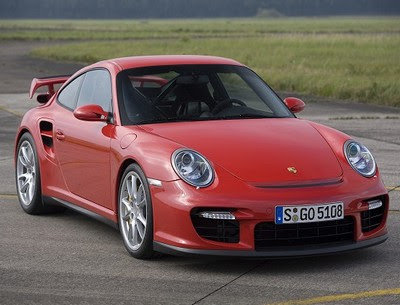
Porsche 911 GT2

Porsche 911 GT2

One week after Ferrari launched the 430 Scuderia, Porsche has done the same with this 911 GT2. Like its bitter Italian rival, the GT2 is a highly evolved version of the standard 911 Turbo. The GT2 costs £131,070, some £31,150 more than the Turbo. For that you get an engine icreased by 50 bhp – now 530 bhp – which is achieved by raising the turbo boost pressure of the 3.6-litre flat six and fitting a very clever expansion intake manifold which reduces the temperature of the fuel/air mixture, improving power and cutting fuel consumption by up to 15%. The entire suspension system has also been uprated to cope with the extra power and includes Porsche’s Active Suspension Management system. Also included are Porsche’s ceramic brake discs, reducing weight by another 50kg per corner. Indeed, saving weight forms as much a part of the GT2 strategy as additional power. A substantial number of kilos have also been lost by deleting the Turbo’s all-wheel-drive hardwear and many more by fitting the GT2 with a titanium exhaust silencer weighing half as much as a conventional steel item. More weight shaving comes in the form of fitting thin sports bucket seats in place of the rather thickly padded stock items, while those in the back have been dispensed with altogether. The result of all this is a car weighing 145kg less than the Turbo. Visually you’re unlikely to mistake the GT2, thanks to that vast front air intake and the unique rear wing unless, of course, you’re on an autobahn and one comes past at over 200mph.

If you’re after an ultra-high-performance car but need one that will handle the accrual of a high mileage in a short period of time, then this is the car, Porsche claim. For all its explosive performance and astonishing output, I don’t doubt that the GT2 will prove a thorn in Ferrari’s side. There’s no faulting the construction quality of the GT2, however, the striking similarity between its cabin materials and those of a standard 911 at less than half the price doesn’t help totting up my score board. Around the £60,000 mark the slightly gloomy and unimaginative cabin with its substantial plastic content may be acceptable, but up here in the thin air above £130,000 it’s probably not. If you’re ever lucky enough to get your hands on a GT2 – and Porsche will probably only sell 50 or so in the UK over the next two years – please take a moment and think about your passengers. They will see the car and probably take a deep gulp especially at all of those wings, scoops and slats, but the moment they settle down in the cabin they will be lulled into an entirely false sense of security. The engine doesn’t thunder into life, but gently fires up and settles down to a nice even idle that’s probably quieter than that of a standard 911 Carrera – thanks to the noise-reducing nature of turbochargers. As you pull away, instead of the car pinging off every bump in the road you’ll discover that it rides with great composure and even some comfort. As speeds gently rise you’ll look around the near enough standard cabin and conclude that there’s nothing to worry about at all.

But then the devil in you will not be able to avoid burying the throttle and clinging on for dear life. And it’s only then that you will find this is a 911 like no other ever built. The GT2 – without the traction advantage of the Turbo’s four-wheel drive – will get to 100mph in 7.4 seconds and to 62mph in exactly half that time. So if you’re lolloping along the motorway at the legal limit and fancy giving your GT2 a bit of stick, you are never less than three seconds away from a driving ban. Find yourself a stretch of road (or, ideally, track) long and legal enough to really stretch its legs and the GT2 is car whose rate of acceleration only slows above 190mph. Given the space it will do 204 mph according to Porsche. Leave the wide open spaces and find some tight, twisty roads and the GT2 continues to impress with impressive levels of grip (in the dry at least) and brakes so strong that to stop any faster you’d have to find a wall to drive into. It steers with the utmost precision and is also unreasonably accommodating if you switch off the stability systems and tread too hard in a corner. If the back does start to swing round (and it is pretty violent in these situations) then you can correct the slide with a lot of balls and an armful of steering. Note to yourself; I must obey the first rule of 911 driving and must not snap shut the throttle. But while the GT2 impresses in all these ways, still it fails to crawl under your skin and infect you with its enthusiasm in the way you might expect of a car costing more than a Ferrari F430. For all its power, the engine has an unremarkable voice and, because it’s turbocharged, a very soft reaction to the accelerator. There’s always a pause before the thrust is delivered, and that wonderful delicacy of feel as you balance the throttle and the steering through a corner, as found in the naturally aspirated 911 GT3, is notable only by its absence. Truth is, the GT2 is a considerably more blunt instrument than its relentlessly enthusiastic stablemate, which is £50,410 cheaper.

This may be the most powerful 911 of all time, but it doesn’t mean it’s a car you can drive without an element of fear. With stability and traction control on, the GT2 will look after you long after you’ve forgotten what’s good for your health. It’s only when you turn everything off that things start to get hairy. Thankfully there’s plenty of safety features at hand. It has the usual plethora of airbags as standard and, while Euro NCAP has yet to get around to testing this sort of car, 911s are known to crash very well. You also get a Porsche Driving Experience day as part of the purchase price, which is well worth every penny. As far as security is concerned, over and above the standard alarm and immobiliser, the GT2 comes with a Thatcham 5-standard tracking system. Porsche’s claim that the GT2 will do 22.6mpg in the combined cycle seems impressive, not least because that makes it more frugal than either the Turbo or the GT3. The reality is that it will be an expensive car to fuel, tax, insure, re-tyre and repair. Given the nature of the beast, the GT2 is an eerily refined and comfortable car. And while this might detract somewhat from the sheer tactile thrills it might otherwise have been able to offer, it also offers the owner an opportunity to use the car for purposes that might otherwise have left it in the garage. For this is a car as at home in the urban crawl as on a race track. You could drive it for 10 hours and emerge still fresh and relaxed.

Although I thoroughly enjoyed a full five hours with the GT2, I do have some doubts. On the positive side, however, every Porsche I seem to test is impeccably constructed, and unlike a Ferrari, won’t be permanently in the garage for repair. Although the interior should be something special, I suppose with a tried and tested formula, and one that functions extremely well, there’s no real need to change it. Nevertheless, the GT2 is a seruously scary car especially if you push it too far. During my test, thinking I could slide it around a curved corner with the traction aids turned off, it bit me straight in the arse resulting in a complete 180 degree spin. Having learnt my lesson and tinkered with my driving style, the GT2 still continued to bite back, and this I fear may get a lot of owners into a serious problem, even with some driver training from Porsche. Even with my racing experience, it still needs a lot of respect if you want to play around, or even push hard on a track day. Having driven the GT3 RS only a week prior to this test, I have to say that the RS is a more useable machine even at the limit. It seems that the GT2 is an all-out balls-machine and a showcase as to what Porsche is really capable of when they put everything into a road car. I have no doubt that as an everyday car it will fulfill every type of driving pleasure and then some, but I would reserve the looney antics for a race track. This I’m sure isn’t going to put the very luck owners who have placed their orders off trying their luck. As the most powerful 911 to date, boy, is it a masterpiece. For yet another kick-in-the-nuts 911, it’s a bit over the top and not one of Porsche’s ultimtate driving machines. But then, that’s probably the point, the GT2 appealing to a handful of drivers who like their 911s old-school feisty.
source: www.autoreview-online.com

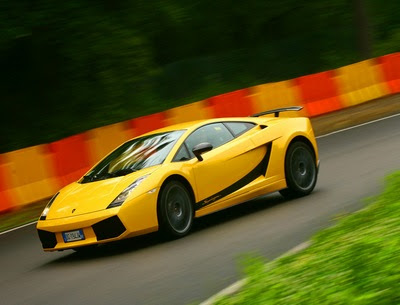
Gallardo Superleggera.

Gallardo Superleggera

Hot on the heels of the Murcielago LP640, the Gallardo Superleggera isn’t just another Lamborghini, it’s something very special indeed. It’s also proof that Lamborghini are a genuine force to be reckoned with. Not just as a maker of exotic supercars but as a manufacturer fit to stand alongside Ferrari and Porsche, both for the standard of its engineering and the state of its growing and impressive car business. With sales up 30 per cent and turnover up 43 per cent, Lamborghini is well on course to achieve its goal of being the most profitable supercar manufacturer in the world. Total production for 2006 was just 2087 cars (compared with 5000-plus for both Ferrari and Aston Martin), yet even this figure represents a massive change of fortunes. Production total is set to increase during 2007, but the Superleggera isn’t going to contribute more than 350 units, as Lamborghini wants to keep it rare and exclusive. So exclusive, in fact, that all of this year’s allocation is sold, despite a 20 per cent increase in price over the regular Gallardo; £150,000. Diehard enthusiasts may feel uneasy at the Audi-coated, iron-fist structure that runs through the formerly chaotic Italian manufacturer, but there’s no arguing with the quality of the end product. Audi’s involvement also bodes well for the future direction of Lamborghini. The Gallardo is full of Audi switchgear, engineering, electronics, and was manufactured in Germany for the first two years of its life (although Audi didn’t advertise the fact). With production on the increase, more of the Italian production line will again be split between Sant’Agata and Ingolstadt. However, this doesn’t detract from the Italian passion that goes into making these phenominal machines.

It’s clear that the master plan is to steer the mid-engined Gallardo sister car, the Audi R8, towards Porsche’s mainstream 911s and Lamborghini towards producing harder, faster and more extreme cars to tackle Porsche’s track-bred models and Ferrari’s F430 Scuderia. The Superleggera is the car to take Lamborghini back to where it belongs. Arriving at the factory, the PR representitive hands me the keys to an Arancio Borealis (orange) Superleggera. The vibrant paintwork is an aquired taste, but having seen one in gunmetal grey, it actually looks more purposeful and suits the proportions more admirably. Squat, square and a low stance, it seaps the kind of hardcore attitude you expect from a stripped version of what was already one of the most back to basic supercars around. Everything you look at and everything you touch reveals the lengths to which head of Lamborghini R&D Maurizio Reggiani and his team have gone to in shaving weight from the Gallardo. Plip the key, open the door and you’re confronted by gloriously glossy one-piece carbon door panels, carbon-shelled sports seats and Alcantara upholstery. The Alcantara is spread over the whole interior, like butter from a knife. It is an aquired taste, especially for a £150K supercar. There’s no denying that’s it a bit over the top, but nevertheless, you know what stable this car has come from.

The engine cover is also made from carbon, as is the fixed rear wing, which can be specified in discreet low-line spec or a more high-rise design, complete with reversing camera. The engine cover’s glass window has been replaced with transparent polycarbonate, while the rear window is made from similarly lightweight Macrolon. Pop the engine cover release, and as you raise it you can feel the difference, the flimsy lid bowing with every movement. I must admit, there is a bit too much visable carbon fibre and interior suade everywhere. Weight saving has never been so in-your-face. The engine develops slightly more power – 9 bhp – over the standard Gallardo. The V10 remains and the power has been increased thanks to a new ECU. New intake and exhaust manifolds have been developed, along with a new reduced back-pressure exhaust system, all of which save weight but also boost’s performance. Judging by the stubby tailpipes, the finished sound should be a goosebump-like war cry. There’s carbonfibre features on the sills and the rear diffuser too, but the highlight for me is the glorious ‘Skorpious’ rims, which are forged from magnesium for minimal weight. Proof of more weight-loss can also be found in the titanium wheel nuts, which clamp the lightweight alloy’s to lighter but stronger wheel hubs. The result is a hefty 100kg weight reduction, dropping the Gallardo to 1420kg. According to Reggiani, ditching four-wheel drive in favour for rear-wheel drive would of shed another 50kg.

Twist the key, and the dash lights spring into life (the calm before the storm) – you know you’re only seconds away from something very special. Twist it further and grin as the starter makes it’s distinctive metallic churn, then get a shiver as ten cylinders come to life, a wall of noise thundering through a free-breathing exhaust system. As the revs drop, the Superleggera settles into a menacing off-beat tickover. Dab the brake pedal, pull back on the right-hand paddle lever and the Superlegerra creeps forward, juddering slightly as the e-gear electronics selects the desired gear and engine revs. The boggo Gallardo has always felt and sounded raw, with plenty of clonks and whirrs. With minimal sound-deadening the Superleggera is even more vocal, sometimes vibrating accross your back and rib cage. If you’re expecting a slick shift, forget it. A conventional H-pattern manual is available as a no-cost option, which I would strongly recommend to opt for – every pull on the paddle lever brings an annoying neck-snap as the e-gear jerks like mad changing through the box. Why can’t anyone get this right? As I turn left out of the factory gates, a quick jab on the accelerator pedal makes the revs jump as if it’s wired to a defibrillator. The back end kicks wide as the power overcomes the ESP electronics. The V10 barks out so loud, I quickly grab second to stop anyone giving me a ticking off when I get back. I suddenly feel ten years old again. Restrained or not, it takes a good mile to appreciate how different the Superleggera feels to the standard car. The Gallardo has always felt grippy and weighty, but has lacked that last few per cent of quick response. In the Superleggera you get the muscular feel but with a new sense of responsiveness. Turn the wheel, and it responds directly. It’s hard to judge the gains without a standard Gallardo for a comparison, but the Superleggera feels more convincing on the road. It cuts through any corner in terrific style and grips like velcro, changing direction with zero inertia. Although it moves, dips and dives without too much fuss, I can’t ignore the terrible ride quality. Because the suspension is set so hard, it has a tendancy to bounce like a stiff spring. It’s as almost as if it can’t cope with the rock hard setting. If you’ve ever experienced a poor, low budget attempt at lowering a car’s suspension ride height, then you’ll know what I mean.

Shortly after the sprint from the factory gates, a left turn on the junction at the top of the road takes you on yet another long, almost straight, smooth road, often frequented by Lamborghini test drivers. Having got use to the Superlegerra, turning into the open, long, flat and sweeping corners, provokes a little understeer thanks to a four wheel drive set up, though the ESP nudges the car neatly back on line without killing too much forward motion, but with the system switched off it feels far more alive and responsive to throttle play. Settled into a perfectly balanced exit speed, the Superleggera cuts through with immense grip, V10 howling and crackling as I wind it up to the rev limiter. It’s a shame that the optional carbon ceramic brakes don’t have the same degree of precision. There’s no arguing that they have the stopping power, but on the road, there’s not much subtlety to the way they work. There’s insufficient bite when you just want to gently cover the pedal, they then bite too hard when you get a little further down the pedal. It’s a trait that’s more annoying the further you drive. Compared with the feel you get from a Porsche or Ferrari equipped with similar brakes, the Superleggera feels clumsy. I’d be lying if I said you can detect the additional nine horse power, but what you do notice is the added ferocity with which the Gallardo’s V10 finds the red line. The top-end of each gear is phenominal, with the last 1500rpm exploding with an exhaust note that sounds like nothing else. The claimed performance improvements are 0.2sec quicker in the 0-62mph time (3.8 seconds), compared to a standard Gallardo. Stopping distances despite the braking issue have also been reduced, the 62mph-0 taking a whole metre less. The Superleggera is an impressive and intoxicating machine. Extremely well constructed, mouth-watering and desirable. This lighter, faster Lamborghini is an interesting drivers’ car and one of the finest from Sant’Agata. Unfortunately it doesn’t escape with an easy victory though and it does have those serious flaws like several thorns in its side. The truely terrible semi-automatic paddle-lever gearbox is one of the worst I’ve experienced, and the very firm, and somethimes uncomfortable suspension setting, reported earlier in my review, results in this dreadful suspension ride. With the added lack of brake pedal feel, the Superleggera misses out by a mile being a real sewn-up stripped-out supercar. With these rectified, it could probably be the best out there.
source: www.autoreview-online.com

Monday, October 8, 2007

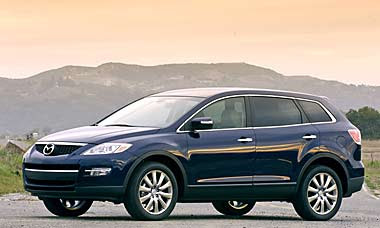
2008 Mazda CX-9

2008 Mazda CX-9

Expert Review

Mazda has become especially good at making "zoom-zoom" vehicles, even if they happen to be SUVs.

The latest such Mazda SUV is the sleek midsize CX-9, which is a larger, more powerful 7-passenger companion to Mazda's fairly new 5-passenger CX-7 SUV.

The CX-9 is Mazda's first 7-passenger vehicle, thanks to a third-row seat roomy enough for two adults to ride comfortably for more than short distances. Many midsize SUV builders can't make the same claim for third-row seating comfort.

Some vehicles call for awkward moves to reach the third seat, but the CX-9 has large openings to it. A sliding second-row seat and wide door openings also facilitate third-seat entry or exit.

Too Many SUVs?
Are there too many Mazda SUVs for a fading SUV market? The automaker doesn't think so. It says its research shows there is a "distinct difference between customers shopping for two- and three-row SUVs."

Actually, the CX-7 and CX-9 arguably could be considered members of the growing crossover vehicle market, if only because of their slick styling and car-like manners.

The CX-9 is not just a longer version of the CX-7. Each model has different body structures, chassis systems and powertrains.

Designed For America
The CX-9 was designed specifically for North America and is aimed mainly at well-educated, nicely-paid folks with two younger kids, although Mazda says it's also for couples with grown children but active lifestyles.

The CX-9 has front- or all-wheel drive and comes in Sport, Touring and top-line Grand Touring trim levels. Prices range from $29,035 for the entry front-wheel drive Sport to $33,875 for the Grand Touring all-wheel drive version I drove.

Lots of Safety Items
Being a family vehicle, the CX-9 has plenty of safety equipment. All trim levels come with standard anti-lock brakes, roll stability control, dynamic stability control and traction control systems, besides front-seat side and side-curtain airbags.

And let's not forget the comfort and convenience features. Also standard are a three-zone automatic climate control system that provides independent temperature settings for the driver zone, front passenger zone and rear passenger's zone.

There's also a tilt-telescopic wheel with radio controls, AM/FM/CD player, height-adjustable driver's seat, power windows and locks with remote entry and cruise control.

Added Features
The Touring adds leather upholstery and heated power front seats, and the Grand Touring adds keyless access and starting, rain-sensing wipers and automatic headlights. The Sport and Touring have 18-inch tires, while the Grand Touring has 20-inch wheels and wider tires for sharper handling.

The navigation system is bundled in a $2,500-$2,717 (depending on trim level) Touring option package that also contains a power tailgate and rearview camera. A power sunroof is in a $1,760 package. A DVD entertainment package costs $2,560.

Front bucket seats are comfortable and supportive in curves, and there is a reclining 60/40 split second-row seat that slides fore and aft a few inches and a 50/50 split third-row seat.

Shares Ford Components
With Ford owning a good chunk of Mazda, the CX-9 shares components with the new Ford Edge SUV/crossover. For instance, the CX-9 has the same 3.5-liter V6 used in the smaller Edge. (The CX-7 has a turbocharged 2.3-liter 4-cylinder with 244 horsepower.)

The CX-9 V6 is sophisticated, with chain-driven dual overhead camshafts for easier maintenance (compared with belt-drive overhead cams), four valves per cylinder and variable intake valve timing. The electronically controlled throttle helps provide instantaneous response.

The 263-horsepower V6 is mounted transversely for allow more interior space. Mazda has modified the intake and exhaust systems to provide better response at lower speeds— something especially appreciated in slow traffic.

Quick on Heavy Feet
The CX-9 isn't light at 4,312-4,546 pounds, but provides fast merges and brisk 65-75 mph passing. The 0-60 mph run takes 7.8 seconds.

Fuel economy is par for the course for a heavy vehicle: 18 mpg in the city and 24 on highways with front-wheel drive and 16 and 22 with all-wheel drive. Only 87-octane gasoline is needed, and the fuel tank holds 20.1 gallons.

The CX-9 has a 6-speed Aisin automatic transmission with a manual shift mode that works better than the Edge's 6-speed automatic.

The Edge transmission was jointly developed by Ford and General Motors. So shame on Ford and GM here. The CX-9 transmission's top two gears have overdrive ratios for the best highway economy.

Car-like Feel
The precise, speed-sensitive power steering contributes to the car-like feel. So does the agile handling. An all-independent suspension helps provide a pleasant ride, and the brakes have brake assist and electronic brake force distribution systems.

The quiet interior has upscale materials. Controls are easy to use, but gauges wash out in bright sunlight. The glove compartment is small, but there's a deep center console bin and conveniently placed cupholders. Sun visor mirrors are lit and have sliding covers.

Roomy Cargo Area
The cargo opening is rather high, but there's a decent 17.2 cubic feet of cargo space behind the third seat when its seatbacks are upright, which often isn't the case with third-row midsize vehicles. Even more cargo room is available with the third seat folded flat and the space becomes cavernous with the second seat folded.

It's not easy making a midsize SUV a "zoom-zoom" vehicle unless you're an outfit such as BMW or Porsche, but the CX-9 stands out.
source: autos.msn.com

2008 Volvo S60


Overview
The Volvo S60 fills the middle range in the Swedish automaker's lineup: It's larger than the compact S40, but not quite as large as the premium-luxury S80. With its sleek, fastback profile, it's one of the most stylish cars in Volvo's lineup. And its beauty is more than skin deep.
The Volvo S60 combines excellent performance with outstanding safety features. Its interior is handsome, and the available leather has a high-quality look and feel. Last year, Volvo firmed up the suspension for more sure-footed handling. The S60 feels like a tight European sedan and still does a good job of smoothing out rough roads.
The 2008 Volvo S60 comes in 2.5T and all-wheel-drive 2.5T AWD versions plus a sporty, more powerful T5 model. (The limited-production S60 R has been discontinued.)
For 2008, all trim levels offer new option packages with premium sound systems and other popular equipment, and an auxiliary audio input, MP3 capability, and WMA CD readability come standard on all models. For 2008, Volvo S60 T5 comes standard with leather sport seats, a power glass sunroof, five-speed Geartronic transmission, satellite radio preparation, a compass, and 17-inch Cassiopeia wheels.
Volvo is renowned for its leadership in safety technology and the S60 comes with a comprehensive array of safety features.

Model Lineup
The 2008 Volvo S60 comes in three versions: 2.5T ($30,885); 2.5T AWD ($32,735); and T5 ($33,985).
The 2.5T is powered by a low-pressure-turbocharged 2.5-liter inline-5 rated at 208 horsepower and 236 pound-feet of torque. A five-speed automatic transmission is standard, while a five-speed Geartronic automatic with Auto-stick manual control is optional, part of an option package.
The 2.5T AWD features the sure-footed traction of all-wheel drive. For better traction in snow, it also comes with narrower 205/55R16 tires, mounted on narrower (6.5-inch vs. 7.0) rims, to help concentrate the car's weight on the tire patches.
Standard equipment for the 2.5T includes fabric upholstery, central power door locks with keyless entry, power tinted windows, front and rear fog lights, power heated outside mirrors with memory, a pollen filter, cruise control, dual-zone electronic climate control, trip computer, leather gearshift knob, leather-wrapped tilt/telescoping steering wheel with illuminated cruise and audio controls, illuminated glovebox and vanity mirrors, power driver's seat with memory and lumbar support, spilt/folding rear seat, a new 100-watt AM/FM/CD stereo with auxiliary input and MP3/WMA capability, and 16-inch aluminum wheels with 215/55R16 tires. The T5 comes with a 2.4-liter inline-5 that uses high-pressure turbocharging to produce 257 horsepower and 258 pound-feet of torque (at 2100-5000 rpm) for much quicker acceleration. The five-speed Geartronic automatic with Auto-Stick manual control is now standard; last year's six-speed manual is no longer available. The T5 features a sports suspension, speed-sensitive power steering, and 17-by-7.5-inch Cassiopeia alloy wheels with 235/45HR17 tires. Additional luxuries include leather sport seats with power adjustment for driver and front passenger, a power glass tilt-and-slide sunroof, aluminum mesh interior trim, blue watch-dial instrumentation, a leather parking brake cover, an auto-dimming rearview mirror with compass, satellite radio preparation, and other interior upgrades.
Options for 2.5T and 2.5T AWD include a Premium Package ($995) that adds the automatic transmission (Geartronic), a power glass tilt-and-slide sunroof, leather seats with eight-way power adjustment for the front passenger, genuine wood inlays for the interior, an auto-dimming rearview mirror with compass, satellite radio preparation, and additional rear stereo speakers. The 2.5T Advanced Package ($1,595) adds speed-sensitive power steering; 235/45R17 tires on 17x7.5-inch Tuscana wheels; a premium 325-watt stereo with six-CD changer, Dolby Pro Logic II, 13 speakers and a diversity antenna; aluminum dash inlays; rear park assist; Homelink; Interior Air Quality System (IAQS); and other conveniences. The T5 Advanced Package for the T5 ($1,695) adds the high-zoot stereo plus active bi-xenon headlamps, rear park assist, the IAQS filtration system, among other upgrades; rear spoiler, and brushed aluminum door handles and trunk moldings. New Imola two-tone leather can be specified for the T5 with the Advanced Package at no additional charge. T5 can be ordered with 17-inch Tuscana chrome wheels ($995), or 235/40R18 tires on 18x8-inch Eudora wheels ($750).
A Climate Package ($675) for all models includes heated front seats, headlamp washers, and Rainsense automatic windshield wipers. Stand-alone options include DVD navigation ($2,120) and metallic paint ($475).
Safety features that come standard on all S60 models include frontal, side-impact and side-curtain airbags; head restraints for all five passengers; seats that move on impact to reduce whiplash injuries (WHIPS); an immobilizer and alarm; anti-lock disc brakes (ABS) with electronic brake-force distribution (EBD); electronic stability control (DSTC); and a tire-pressure monitor. The S60 features Volvo's famous safety-cage construction. Seat belts have pyrotechnic pretensioners in all seating positions; they are superb, so be sure to use them at all times. ISO-FIX attachments are provided for rearward-facing child safety seats.

Walkaround
The 2008 Volvo S60 looks like a smaller version of the big S80 luxury sedan. It looks compact at first glance, but it's relatively large and roomy. What you can't see is all the engineering designed to protect the people riding inside the structure. It's there that Volvo's reputation for safety continues and deservedly so.
S60 has a hunched-shoulder look to the rear flanks, suggesting a hockey player ready to lead a charge up the ice.
The front grille and fascia were face-lifted slightly for 2007, improving aerodynamics and adding a touch of visual crispness, particularly below the bumper. It's a subtle change, but we like it. At the same time the outside mirrors were redesigned to incorporated integrated turn signals that automatically flash three times with light pressure on the turn signal stalk. There are no further changes in appearance for 2008.
Active Bi-Xenon headlamps are available on the T5 as part of the Advanced Package. A mini-processor gathers data to optimize their beam pattern, and the beams can be turned up to 15 degrees in either direction.

Interior Features
Overall, the interior of the Volvo S60 is handsome and comfortable. It's roomy in the front seats. The front seats are cushy. Volvo says the seats were engineered using orthopedic principles to provide better support and comfort on long trips. The optional leather has a high-quality look and feel.
The dashboard flows in a pleasant shape. On Premium Package cars attractive wood trim appears sparingly on the glovebox lid and on all four doors; while sportier versions of the S60 eschew wood for metallic trim. Aluminum inserts brighten the steering column stalks and the steering wheel hub. The quality of the material used to cover other surfaces is good.
The standard gauges are attractive, with their flat gray background, and easy to read; while the switches are intuitive and easy to use. The T5 features the same watch-dial instruments used in the flagship S80. The four blue-faced instruments are surrounded by gray rings with subtle blue hash marks. They feature clear, attractive gray numerals and thin red pointers on blue hubs.
Heating, ventilation and air conditioning controls are well designed and easy to operate, with big metaphoric controls to direct the airflow. Power-window buttons with auto-down are conveniently mounted on the door. Inside door handles are easy to grab.
The innovative radio controls take some familiarization to master. Changing preset channels involves turning a knob, rather than pressing a button. Once understood, the system works well. The leather-wrapped steering wheel has controls for the audio system that makes operating it easier while driving.
The center console features a covered storage bin and cup holders that fit all standard sizes of beverage container. There's another mini cup holder on the center of the dash.
Getting into the back seat requires a duck of the head. Once back there, the S60 offers good rear headroom, but larger adults will find it short of legroom.
The trunk is roomy and deep and will hold a lot of small bags. Putting big boxes into it might present a challenge, however. To carve the S60's swoopy shape, Volvo had to make design concessions that constrict the trunk opening. The rear seats are split 60/40 and fold down for greater cargo capacity. The front passenger seat also flips down; fold down the right rear seat and front passenger seat, and it will accommodate something quite long, such as a ladder.

Driving Impressions
The Volvo S60 boasts a nice ride quality, even over nasty bumps, even with 17-inch wheels. Volvo tightened up the base suspension for 2007, with firmer springs and shocks, front and rear; and thicker anti-roll bars supported by solid bushings. Roll stiffness was increased by 25 percent.
High-speed stability is extremely good. Front-wheel-drive models exhibit some torque steer under hard acceleration. Stand on the gas and you'll feel a tug on the steering wheel. It's especially noticeable on the T5 with its more powerful engine. It's really no big deal, though, and you get used to it. Still, the S60 definitely engages the driver because you have to pay attention to the steering when you're driving hard.
The T5 produces prodigious thrust from its high-pressure turbocharger. Yet it rates an EPA-estimated 18/26 mpg City/Highway. We found the S60 brakes on the soft side, but braking was stable. When activated, the ABS was very smooth.
The steering is slightly heavier in the 2.5T AWD because of the weight of the all-wheel-drive system. It also has a more on-center feel (less play, in other words). The ride is firmer on the all-wheel-drive model, which has stiffer shocks to handle the increased weight. Overall, we think the AWD model's improved traction and handling in the rain and snow are worthwhile for anyone who annually faces those conditions.
We drove over gravel roads in the 2.5T AWD, and found directional stability on loose surfaces excellent. Power in the 2.5T AWD is distributed between the front and rear wheels using a wet multi-plate clutch controlled by electronics that monitor driving conditions. With a steady throttle on dry pavement, about 95 percent of the power is transmitted to the front wheels; but up to 50 percent can go to the rear wheels when required. The balance changes seamlessly and instantaneously. When one wheel slips, the balance of power shifts away from that wheel, thus replacing the slip with grip. In other words, it's more secure and better stuck to the road when the weather gets nasty.

Summary
The Volvo S60 rides well and handles well. It feels stable at high speeds. The all-wheel-drive model provides excellent driver control on slippery surfaces. The sportier T5 offers strong acceleration performance. Volvo is renowned for safety engineering and the S60 is fully equipped with active and passive safety features including a rigid safety cage.
source: www.nctd.com

Chrysler Sebring

Chrysler Sebring


Chrysler Sebring – 2007 First Drive: We had climbed out of a crater in the heart of Death Valley and were headed to our cars when a bright red 2007 Chrysler Sebring pulled up. The group, which had been appreciating the view from the top of the crater, turned, looked and launched into a spirited fight. “Ugly, ugly, ugly!” said one. “Classy, cool and different,” said another. It was amusing, and appropriate. After all, you see Death Valley as either inspiring or a great vast nothing, and car buyers will likely see the Sebring in the same way. Sadly, unlike a sunset in the desert, there’s nothing here for everyone to love, and far too much that leaves car buyers with a case of the blahs.

Origins
The history of the Chrysler Sebring is like the history of a typical suburban neighborhood. Sure, it has one, but it’s a short story of new things in old places. At various times, the Sebring has been called the Chrysler Cirrus, Dodge Stratus and Plymouth Breeze. In 1995, it lasted until 2001 and was replaced by a new car and a new platform. In its glory days, the Sebring was heralded as sleek, powerful and luxurious, with a popular, top-selling convertible model for a number of years. Times do change, however, and the Sebring quickly got old. The new version replaces what has largely become a rental car. Related vehicles to the 2007 model include the Dodge Avenger.

Pricing
When most people think of Sebring, they think of the convertible, which will be available soon as a 2008 model. The sedan, meanwhile, is on sale now in three choices: The base Sebring, which starts at $18,995, the Sebring Touring model ($20,195), and the Sebring Limited ($23,995). Prices include a $675 destination fee. Option pricing includes, a Convenience Group for $895, an Electronics Convenience Group for $915 and MyGIG Multimedia Infotainment Package for $1,895. Touring and Limited buyers can upgrade the standard 2.4-liter four cylinder engine: the Touring offers a 189-horsepower Flex-Fuel 2.7-liter V6 ($1,350), while Limited shoppers move up to a 235-horsepower 3.5-liter V6 for $1,550 – plus $200 for the six-speed automatic transmission.

Model Mix – Sebring Standard Features
Starting at $18,995 (including $675 destination charge), the base Sebring sedan comes with a 2.4-liter four-cylinder “world” engine – meaning it’s shared with Mitsubishi and Hyundai – mustering 173-horsepower at 6,000 rpm and 166 lb.-ft. of torque at 4,400 rpm while garnering an EPA-rated 24/32 mpg. Mated to that engine is a four-speed automatic transmission. Inside, standard features include side curtain and side seat airbags, ABS brakes, power door locks and windows, 60/40 split rear seat, tilt/telescoping steering wheel, driver-side lumbar with manual height adjustor, CD/MP3 stereo and 16-inch wheels with covers. Not available for the base Sebring is a power passenger front seat or the Dodge Avenger’s cooled glovebox feature.

Model Mix – Touring Standard Features
Things improve equipment-wise when you go up a class to the Touring model and pay $20,195, including $675 destination. In addition to the base Sebring standard features, Touring model shoppers get YES Essentials fabric – the stuff that’s supposed to repel stains and odors – along with an upgraded instrument panel with chrome trim, bezels and brushed aluminum, express up/down windows for driver and passenger, cruise with steering wheel controls, six-way driver’s seat, LED map light, lighted visor mirrors, and rear passenger assist grab handles. Also standard on Touring (and Limited) models is Chrysler’s fold-flat passenger seat, which works easily and expands cargo capacity. Exterior upgrades on the Touring model include 17-inch aluminum wheels and tires, as well as automatic headlamps.

Model Mix – Limited Standard Features
Chrysler wants these Sebrings to be special, and wants you to feel special for buying the top trim. Whether or not that’s true depends on your perspective, but there’s better value going on for $23,995 than in the less expensive trims. Standard features in addition to that offered on the Touring model include two-tone leather on the seats, steering wheel and leather shift knob, a front console arm rest, Boston Acoustics sound system with steering wheel controls, Sirius Satellite radio, an eight-way power driver seat, electronic vehicle information center, a single zone automatic temperature control and theft alarm. Inside you’re treated to tortoise shell accents on the steering wheel, instrument panel and doors, while on the outside Limited models feature fog lamps, chrome door handles and 17-inch wheels and tires.

Options – Sebring
Upgrading your Sebring depends greatly on the model you start with. For example, base model Sebrings are stuck with the 2.4-liter four cylinder, while the other trims offer significant upgrades throughout. Inside, base shoppers can option up to a six-disc CD/DVD/MP3 stereo, Sirius Satellite, hands-free communication, heated cloth seats, daytime running lights, a sunroof and a Convenience Package that includes alarm, travel computer, information center, express down windows, YES Essentials seat fabric and remote start. New features such as a heated and cooled cupholder and MyGIG, Chrysler’s 20-gig infotainment system, are only available on Touring and Limited models.

Options – Sebring
Upgrading your Sebring depends greatly on the model you start with. For example, base model Sebrings are stuck with the 2.4-liter four cylinder, while the other trims offer significant upgrades throughout. Inside, base shoppers can option up to a six-disc CD/DVD/MP3 stereo, Sirius Satellite, hands-free communication, heated cloth seats, daytime running lights, a sunroof and a Convenience Package that includes alarm, travel computer, information center, express down windows, YES Essentials seat fabric and remote start. New features such as a heated and cooled cupholder and MyGIG, Chrysler’s 20-gig infotainment system, are only available on Touring and Limited models.

Outside
Why this? Chrysler had a home run with the 300, so why not make the Sebring in its image? Why, indeed. The world wonders, puzzled, yet all officials can say is that the dimensions didn’t work, so instead they went for the Airflite/Crossfire look. Yikes. We all know how successful the Crossfire was with buyers, and sure enough, it’s back: the strakes, the long snout and roofline that ends into a short rear overhang. Some may like it, others not. But what’s indisputable is that the Sebring is different, a unique midsize sedan that stands out from the pack. You may like it. You may hate it. But you will notice the new Sebring when it drives by. Can you say that about the Honda Accord?

Inside
Based on the same platform as the Dodge Avenger, the new Sebring is larger than the outgoing model but not quite as roomy as the competition. So depending on the Sebring you buy, your commute will either be ordinary – bordering on unsatisfying – or crazy fun, with movies in the back and hot coffee up front, thanks to the Limited’s rear seat DVD player and hot/cold cupholder. There’s also a fold-flat passenger front seat and MyGIG, an infotainment system that offers buyers 20 gigs of storage for music, photos and directions. What does come standard inside and no matter which Sebring you get, however, is safety: Side curtain and side seat airbags are among the safety features standard on all trims.

Under the Hood
Three engines come with the Sebring: the standard 2.4-liter four-cylinder making 173 horsepower at 6,000 rpm/166 lb.-ft of torque at 4,400 rpm, an available 2.7-liter V6 rated at 189 horsepower at 6,400 rpm/191 lb.-ft of torque at 4,000 rpm, and finally a 3.5-liter making 235 horsepower at 6,400 rpm/232 lb.-ft. of torque at 4,000 rpm. The four-cylinder is the same one powering the Dodge Caliber and is the so-called World Engine, seen also in Mitsubishi and Hyundai cars. All save the 3.5-liter V6 engine are mated to a four-speed automatic; the 3.5-liter gets a six-speed with manual shift. The Sebring has rack-and-pinion steering with 16-,17-, or 18-inch wheels, all-season rubber and four-wheel disc brakes with ABS. The Sebring rides on a stretched version of the Dodge Caliber chassis.

Test Car, Location
We drove the 2007 Chrysler Sebring Limited for a day in and around Palm Springs, CA on a mix of city streets and highways. While we were unable to test the vehicle in heavy traffic situations, we did get plenty of stop-and-go red light exposure, as well as a few canyon type settings and wide open desert roads. The quality of the pavement was mixed but mostly new, giving us scant opportunity to test the suspension in terms of uneven pavement, pot holes and bumps.

Performance
Of the things we enjoyed the most, the six-speed transmission was at the top of the list. Coupled with the model’s 3.5-liter 235-horsepower engine, the transmission – and its manual shift feature – mastered the power output smoothly, offering prompt response to throttle input whether at a stop or while passing. The 3,525 lb.-weight of the vehicle diminished its motivation. All in all, it’s a slightly heavy yet capable performer that could use a touch more power, with a transmission that makes the drive more enjoyable. While that’s good news for Limited shoppers, it makes us wonder about the performance offered up in trims featuring four-cylinder engines and four-speed automatics.

Ride and Handling
Despite a pudgy profile – the Sebring Limited comes in at just over 3,500 lbs. – it handled most corners capably. Steering was precise but soft, with little feedback. The brakes felt flat and the pedal difficult to get a feel for, but the four-wheel discs did a good job of stopping quickly under duress. While the Limited has a slightly more performance-oriented suspension setup, all trims enjoy a stiffer chassis compared to the outgoing model. The Sebring is mostly a quiet ride, though the 18-inch wheels did exhibit noise on the freeway and complained when the driving began to get a little aggressive. Overall it’s a quiet and compliant ride, a "good enough" performer for drivers happy with that level of ride and handling from their new sedan.

Comfort
Here’s the conundrum: The Sebring is big where it doesn’t really need to be, and not big enough where it counts. The seats are narrow; the front row is too intimate with two people seated inside. The back is also narrow with limited hip and elbow room, but head room and leg room is plentiful, thanks to a wide opening under the front row seats. In essence, this may be the perfect car for tall, skinny drivers or those with longer than average legs, while wide shoppers may find the Sebring to be a little tight. In terms of material comfort, we’d opt for the YES Essentials fabric; the Sebring leather comes across as too rubbery.

Controls
From the trendy blueish-green tint of the backlighting to the gray plastic surfaces and the white faces of the instrument panels, the interior is modern but lacking in warmth, something expressly communicated in the controls and instrument gauges. There’s a sort of Museum of Modern Art vibe going on here. Where the inside of a Toyota, for example, shouts value and durability, these Chrysler stalks, the lighting hues and buttons for entertainment and environment emote a cool, hip luxury feel. It works, and it feels good, but that modern Chrysler premium vibe comes at the expense of warmth and even a little comfort.

Selling Points
If you buy a Sebring Limited with the power upgrade and toss on a few of the Chrysler extras – hot/cold cupholder, My GIG infotainment, the rear seat DVD package – it’s a nice car that offers something different than your average sedan. Shoot, you can keep your coffee hot if you buy a Sebring, and you can fold that front passenger seat; that’s worth something, right? Indeed, the Sebring may be just what you need if you’re after a moderately powerful sedan with a six-speed transmission, strakes on the hood and a hot/cold cupholder, just as long as you don’t mind paying more for the extras.

Deal Breakers
While the top trim Sebring offers a nice powertrain and some innovative interior enhancements, those with a price range of $20,000 or less are stuck with a four-speed automatic and a base car missing virtually all of the extras. Add to that an interior that feels crowded and an average driving impression, and what you’ve got is a car that competes on a value comparison, but just barely. In essence, it seems as though Chrysler is counting on the design to move people into this sedan and up to the higher priced trims. Considering the competition – and, some would argue, the design – that’s a really bad idea.

Competitors
Talk about your crowded classrooms. The Sebring goes against a crowd of sedans like the Ford Fusion, Honda Accord, Toyota Camry and Saturn Aura. Toss the Hyundai Sonata and others into the mix and you’ve got yourself quite a barn burner. With this lot, you need more than a heated cupholder and side curtain airbags, you need a competitive powertrain, modern styling and a quality interior. Whether the Sebring measures up or not depends on you, ultimately. We found that it offers a decent ride, a capable available powertrain and available innovations that set it apart. However, strip away the baubles and it falls a little short and also must compete against itself as the Dodge Avenger.

Specifications:
Test Vehicle: 2008 Chrysler Sebring Limited
As-tested Price: $23,995 (including a $675 destination charge)
Engine Size and Type: 3.5-liter V6
Engine Horsepower: 235 at 6,400 rpm
Engine Torque: 232 lb.-ft. at 4,000 rpm
Transmission: Six-speed automatic
EPA Fuel Economy: 19/28 mpg
Curb Weight, lbs.: 3,287
Length, inches: 190.6
Width, inches: 71.2
Wheelbase, inches: 109
Height, inches: 59
Legroom, inches (front/rear): 42.4/37.6
Headroom, inches (front/rear): 40.0/38.4
Max. Seating Capacity: Five
Max. Cargo Volume, cu. ft.: 13.6
source: www.myride.com