Monday, October 8, 2007

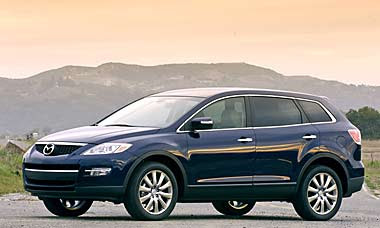
2008 Mazda CX-9

2008 Mazda CX-9

Expert Review

Mazda has become especially good at making "zoom-zoom" vehicles, even if they happen to be SUVs.

The latest such Mazda SUV is the sleek midsize CX-9, which is a larger, more powerful 7-passenger companion to Mazda's fairly new 5-passenger CX-7 SUV.

The CX-9 is Mazda's first 7-passenger vehicle, thanks to a third-row seat roomy enough for two adults to ride comfortably for more than short distances. Many midsize SUV builders can't make the same claim for third-row seating comfort.

Some vehicles call for awkward moves to reach the third seat, but the CX-9 has large openings to it. A sliding second-row seat and wide door openings also facilitate third-seat entry or exit.

Too Many SUVs?
Are there too many Mazda SUVs for a fading SUV market? The automaker doesn't think so. It says its research shows there is a "distinct difference between customers shopping for two- and three-row SUVs."

Actually, the CX-7 and CX-9 arguably could be considered members of the growing crossover vehicle market, if only because of their slick styling and car-like manners.

The CX-9 is not just a longer version of the CX-7. Each model has different body structures, chassis systems and powertrains.

Designed For America
The CX-9 was designed specifically for North America and is aimed mainly at well-educated, nicely-paid folks with two younger kids, although Mazda says it's also for couples with grown children but active lifestyles.

The CX-9 has front- or all-wheel drive and comes in Sport, Touring and top-line Grand Touring trim levels. Prices range from $29,035 for the entry front-wheel drive Sport to $33,875 for the Grand Touring all-wheel drive version I drove.

Lots of Safety Items
Being a family vehicle, the CX-9 has plenty of safety equipment. All trim levels come with standard anti-lock brakes, roll stability control, dynamic stability control and traction control systems, besides front-seat side and side-curtain airbags.

And let's not forget the comfort and convenience features. Also standard are a three-zone automatic climate control system that provides independent temperature settings for the driver zone, front passenger zone and rear passenger's zone.

There's also a tilt-telescopic wheel with radio controls, AM/FM/CD player, height-adjustable driver's seat, power windows and locks with remote entry and cruise control.

Added Features
The Touring adds leather upholstery and heated power front seats, and the Grand Touring adds keyless access and starting, rain-sensing wipers and automatic headlights. The Sport and Touring have 18-inch tires, while the Grand Touring has 20-inch wheels and wider tires for sharper handling.

The navigation system is bundled in a $2,500-$2,717 (depending on trim level) Touring option package that also contains a power tailgate and rearview camera. A power sunroof is in a $1,760 package. A DVD entertainment package costs $2,560.

Front bucket seats are comfortable and supportive in curves, and there is a reclining 60/40 split second-row seat that slides fore and aft a few inches and a 50/50 split third-row seat.

Shares Ford Components
With Ford owning a good chunk of Mazda, the CX-9 shares components with the new Ford Edge SUV/crossover. For instance, the CX-9 has the same 3.5-liter V6 used in the smaller Edge. (The CX-7 has a turbocharged 2.3-liter 4-cylinder with 244 horsepower.)

The CX-9 V6 is sophisticated, with chain-driven dual overhead camshafts for easier maintenance (compared with belt-drive overhead cams), four valves per cylinder and variable intake valve timing. The electronically controlled throttle helps provide instantaneous response.

The 263-horsepower V6 is mounted transversely for allow more interior space. Mazda has modified the intake and exhaust systems to provide better response at lower speeds— something especially appreciated in slow traffic.

Quick on Heavy Feet
The CX-9 isn't light at 4,312-4,546 pounds, but provides fast merges and brisk 65-75 mph passing. The 0-60 mph run takes 7.8 seconds.

Fuel economy is par for the course for a heavy vehicle: 18 mpg in the city and 24 on highways with front-wheel drive and 16 and 22 with all-wheel drive. Only 87-octane gasoline is needed, and the fuel tank holds 20.1 gallons.

The CX-9 has a 6-speed Aisin automatic transmission with a manual shift mode that works better than the Edge's 6-speed automatic.

The Edge transmission was jointly developed by Ford and General Motors. So shame on Ford and GM here. The CX-9 transmission's top two gears have overdrive ratios for the best highway economy.

Car-like Feel
The precise, speed-sensitive power steering contributes to the car-like feel. So does the agile handling. An all-independent suspension helps provide a pleasant ride, and the brakes have brake assist and electronic brake force distribution systems.

The quiet interior has upscale materials. Controls are easy to use, but gauges wash out in bright sunlight. The glove compartment is small, but there's a deep center console bin and conveniently placed cupholders. Sun visor mirrors are lit and have sliding covers.

Roomy Cargo Area
The cargo opening is rather high, but there's a decent 17.2 cubic feet of cargo space behind the third seat when its seatbacks are upright, which often isn't the case with third-row midsize vehicles. Even more cargo room is available with the third seat folded flat and the space becomes cavernous with the second seat folded.

It's not easy making a midsize SUV a "zoom-zoom" vehicle unless you're an outfit such as BMW or Porsche, but the CX-9 stands out.
source: autos.msn.com

2008 Volvo S60


Overview
The Volvo S60 fills the middle range in the Swedish automaker's lineup: It's larger than the compact S40, but not quite as large as the premium-luxury S80. With its sleek, fastback profile, it's one of the most stylish cars in Volvo's lineup. And its beauty is more than skin deep.
The Volvo S60 combines excellent performance with outstanding safety features. Its interior is handsome, and the available leather has a high-quality look and feel. Last year, Volvo firmed up the suspension for more sure-footed handling. The S60 feels like a tight European sedan and still does a good job of smoothing out rough roads.
The 2008 Volvo S60 comes in 2.5T and all-wheel-drive 2.5T AWD versions plus a sporty, more powerful T5 model. (The limited-production S60 R has been discontinued.)
For 2008, all trim levels offer new option packages with premium sound systems and other popular equipment, and an auxiliary audio input, MP3 capability, and WMA CD readability come standard on all models. For 2008, Volvo S60 T5 comes standard with leather sport seats, a power glass sunroof, five-speed Geartronic transmission, satellite radio preparation, a compass, and 17-inch Cassiopeia wheels.
Volvo is renowned for its leadership in safety technology and the S60 comes with a comprehensive array of safety features.

Model Lineup
The 2008 Volvo S60 comes in three versions: 2.5T ($30,885); 2.5T AWD ($32,735); and T5 ($33,985).
The 2.5T is powered by a low-pressure-turbocharged 2.5-liter inline-5 rated at 208 horsepower and 236 pound-feet of torque. A five-speed automatic transmission is standard, while a five-speed Geartronic automatic with Auto-stick manual control is optional, part of an option package.
The 2.5T AWD features the sure-footed traction of all-wheel drive. For better traction in snow, it also comes with narrower 205/55R16 tires, mounted on narrower (6.5-inch vs. 7.0) rims, to help concentrate the car's weight on the tire patches.
Standard equipment for the 2.5T includes fabric upholstery, central power door locks with keyless entry, power tinted windows, front and rear fog lights, power heated outside mirrors with memory, a pollen filter, cruise control, dual-zone electronic climate control, trip computer, leather gearshift knob, leather-wrapped tilt/telescoping steering wheel with illuminated cruise and audio controls, illuminated glovebox and vanity mirrors, power driver's seat with memory and lumbar support, spilt/folding rear seat, a new 100-watt AM/FM/CD stereo with auxiliary input and MP3/WMA capability, and 16-inch aluminum wheels with 215/55R16 tires. The T5 comes with a 2.4-liter inline-5 that uses high-pressure turbocharging to produce 257 horsepower and 258 pound-feet of torque (at 2100-5000 rpm) for much quicker acceleration. The five-speed Geartronic automatic with Auto-Stick manual control is now standard; last year's six-speed manual is no longer available. The T5 features a sports suspension, speed-sensitive power steering, and 17-by-7.5-inch Cassiopeia alloy wheels with 235/45HR17 tires. Additional luxuries include leather sport seats with power adjustment for driver and front passenger, a power glass tilt-and-slide sunroof, aluminum mesh interior trim, blue watch-dial instrumentation, a leather parking brake cover, an auto-dimming rearview mirror with compass, satellite radio preparation, and other interior upgrades.
Options for 2.5T and 2.5T AWD include a Premium Package ($995) that adds the automatic transmission (Geartronic), a power glass tilt-and-slide sunroof, leather seats with eight-way power adjustment for the front passenger, genuine wood inlays for the interior, an auto-dimming rearview mirror with compass, satellite radio preparation, and additional rear stereo speakers. The 2.5T Advanced Package ($1,595) adds speed-sensitive power steering; 235/45R17 tires on 17x7.5-inch Tuscana wheels; a premium 325-watt stereo with six-CD changer, Dolby Pro Logic II, 13 speakers and a diversity antenna; aluminum dash inlays; rear park assist; Homelink; Interior Air Quality System (IAQS); and other conveniences. The T5 Advanced Package for the T5 ($1,695) adds the high-zoot stereo plus active bi-xenon headlamps, rear park assist, the IAQS filtration system, among other upgrades; rear spoiler, and brushed aluminum door handles and trunk moldings. New Imola two-tone leather can be specified for the T5 with the Advanced Package at no additional charge. T5 can be ordered with 17-inch Tuscana chrome wheels ($995), or 235/40R18 tires on 18x8-inch Eudora wheels ($750).
A Climate Package ($675) for all models includes heated front seats, headlamp washers, and Rainsense automatic windshield wipers. Stand-alone options include DVD navigation ($2,120) and metallic paint ($475).
Safety features that come standard on all S60 models include frontal, side-impact and side-curtain airbags; head restraints for all five passengers; seats that move on impact to reduce whiplash injuries (WHIPS); an immobilizer and alarm; anti-lock disc brakes (ABS) with electronic brake-force distribution (EBD); electronic stability control (DSTC); and a tire-pressure monitor. The S60 features Volvo's famous safety-cage construction. Seat belts have pyrotechnic pretensioners in all seating positions; they are superb, so be sure to use them at all times. ISO-FIX attachments are provided for rearward-facing child safety seats.

Walkaround
The 2008 Volvo S60 looks like a smaller version of the big S80 luxury sedan. It looks compact at first glance, but it's relatively large and roomy. What you can't see is all the engineering designed to protect the people riding inside the structure. It's there that Volvo's reputation for safety continues and deservedly so.
S60 has a hunched-shoulder look to the rear flanks, suggesting a hockey player ready to lead a charge up the ice.
The front grille and fascia were face-lifted slightly for 2007, improving aerodynamics and adding a touch of visual crispness, particularly below the bumper. It's a subtle change, but we like it. At the same time the outside mirrors were redesigned to incorporated integrated turn signals that automatically flash three times with light pressure on the turn signal stalk. There are no further changes in appearance for 2008.
Active Bi-Xenon headlamps are available on the T5 as part of the Advanced Package. A mini-processor gathers data to optimize their beam pattern, and the beams can be turned up to 15 degrees in either direction.

Interior Features
Overall, the interior of the Volvo S60 is handsome and comfortable. It's roomy in the front seats. The front seats are cushy. Volvo says the seats were engineered using orthopedic principles to provide better support and comfort on long trips. The optional leather has a high-quality look and feel.
The dashboard flows in a pleasant shape. On Premium Package cars attractive wood trim appears sparingly on the glovebox lid and on all four doors; while sportier versions of the S60 eschew wood for metallic trim. Aluminum inserts brighten the steering column stalks and the steering wheel hub. The quality of the material used to cover other surfaces is good.
The standard gauges are attractive, with their flat gray background, and easy to read; while the switches are intuitive and easy to use. The T5 features the same watch-dial instruments used in the flagship S80. The four blue-faced instruments are surrounded by gray rings with subtle blue hash marks. They feature clear, attractive gray numerals and thin red pointers on blue hubs.
Heating, ventilation and air conditioning controls are well designed and easy to operate, with big metaphoric controls to direct the airflow. Power-window buttons with auto-down are conveniently mounted on the door. Inside door handles are easy to grab.
The innovative radio controls take some familiarization to master. Changing preset channels involves turning a knob, rather than pressing a button. Once understood, the system works well. The leather-wrapped steering wheel has controls for the audio system that makes operating it easier while driving.
The center console features a covered storage bin and cup holders that fit all standard sizes of beverage container. There's another mini cup holder on the center of the dash.
Getting into the back seat requires a duck of the head. Once back there, the S60 offers good rear headroom, but larger adults will find it short of legroom.
The trunk is roomy and deep and will hold a lot of small bags. Putting big boxes into it might present a challenge, however. To carve the S60's swoopy shape, Volvo had to make design concessions that constrict the trunk opening. The rear seats are split 60/40 and fold down for greater cargo capacity. The front passenger seat also flips down; fold down the right rear seat and front passenger seat, and it will accommodate something quite long, such as a ladder.

Driving Impressions
The Volvo S60 boasts a nice ride quality, even over nasty bumps, even with 17-inch wheels. Volvo tightened up the base suspension for 2007, with firmer springs and shocks, front and rear; and thicker anti-roll bars supported by solid bushings. Roll stiffness was increased by 25 percent.
High-speed stability is extremely good. Front-wheel-drive models exhibit some torque steer under hard acceleration. Stand on the gas and you'll feel a tug on the steering wheel. It's especially noticeable on the T5 with its more powerful engine. It's really no big deal, though, and you get used to it. Still, the S60 definitely engages the driver because you have to pay attention to the steering when you're driving hard.
The T5 produces prodigious thrust from its high-pressure turbocharger. Yet it rates an EPA-estimated 18/26 mpg City/Highway. We found the S60 brakes on the soft side, but braking was stable. When activated, the ABS was very smooth.
The steering is slightly heavier in the 2.5T AWD because of the weight of the all-wheel-drive system. It also has a more on-center feel (less play, in other words). The ride is firmer on the all-wheel-drive model, which has stiffer shocks to handle the increased weight. Overall, we think the AWD model's improved traction and handling in the rain and snow are worthwhile for anyone who annually faces those conditions.
We drove over gravel roads in the 2.5T AWD, and found directional stability on loose surfaces excellent. Power in the 2.5T AWD is distributed between the front and rear wheels using a wet multi-plate clutch controlled by electronics that monitor driving conditions. With a steady throttle on dry pavement, about 95 percent of the power is transmitted to the front wheels; but up to 50 percent can go to the rear wheels when required. The balance changes seamlessly and instantaneously. When one wheel slips, the balance of power shifts away from that wheel, thus replacing the slip with grip. In other words, it's more secure and better stuck to the road when the weather gets nasty.

Summary
The Volvo S60 rides well and handles well. It feels stable at high speeds. The all-wheel-drive model provides excellent driver control on slippery surfaces. The sportier T5 offers strong acceleration performance. Volvo is renowned for safety engineering and the S60 is fully equipped with active and passive safety features including a rigid safety cage.
source: www.nctd.com

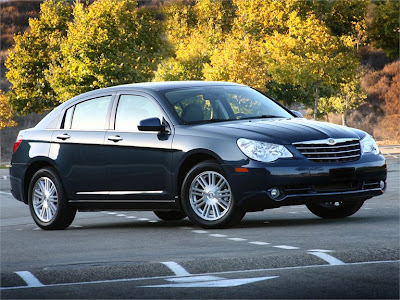
Chrysler Sebring

Chrysler Sebring


Chrysler Sebring – 2007 First Drive: We had climbed out of a crater in the heart of Death Valley and were headed to our cars when a bright red 2007 Chrysler Sebring pulled up. The group, which had been appreciating the view from the top of the crater, turned, looked and launched into a spirited fight. “Ugly, ugly, ugly!” said one. “Classy, cool and different,” said another. It was amusing, and appropriate. After all, you see Death Valley as either inspiring or a great vast nothing, and car buyers will likely see the Sebring in the same way. Sadly, unlike a sunset in the desert, there’s nothing here for everyone to love, and far too much that leaves car buyers with a case of the blahs.

Origins
The history of the Chrysler Sebring is like the history of a typical suburban neighborhood. Sure, it has one, but it’s a short story of new things in old places. At various times, the Sebring has been called the Chrysler Cirrus, Dodge Stratus and Plymouth Breeze. In 1995, it lasted until 2001 and was replaced by a new car and a new platform. In its glory days, the Sebring was heralded as sleek, powerful and luxurious, with a popular, top-selling convertible model for a number of years. Times do change, however, and the Sebring quickly got old. The new version replaces what has largely become a rental car. Related vehicles to the 2007 model include the Dodge Avenger.

Pricing
When most people think of Sebring, they think of the convertible, which will be available soon as a 2008 model. The sedan, meanwhile, is on sale now in three choices: The base Sebring, which starts at $18,995, the Sebring Touring model ($20,195), and the Sebring Limited ($23,995). Prices include a $675 destination fee. Option pricing includes, a Convenience Group for $895, an Electronics Convenience Group for $915 and MyGIG Multimedia Infotainment Package for $1,895. Touring and Limited buyers can upgrade the standard 2.4-liter four cylinder engine: the Touring offers a 189-horsepower Flex-Fuel 2.7-liter V6 ($1,350), while Limited shoppers move up to a 235-horsepower 3.5-liter V6 for $1,550 – plus $200 for the six-speed automatic transmission.

Model Mix – Sebring Standard Features
Starting at $18,995 (including $675 destination charge), the base Sebring sedan comes with a 2.4-liter four-cylinder “world” engine – meaning it’s shared with Mitsubishi and Hyundai – mustering 173-horsepower at 6,000 rpm and 166 lb.-ft. of torque at 4,400 rpm while garnering an EPA-rated 24/32 mpg. Mated to that engine is a four-speed automatic transmission. Inside, standard features include side curtain and side seat airbags, ABS brakes, power door locks and windows, 60/40 split rear seat, tilt/telescoping steering wheel, driver-side lumbar with manual height adjustor, CD/MP3 stereo and 16-inch wheels with covers. Not available for the base Sebring is a power passenger front seat or the Dodge Avenger’s cooled glovebox feature.

Model Mix – Touring Standard Features
Things improve equipment-wise when you go up a class to the Touring model and pay $20,195, including $675 destination. In addition to the base Sebring standard features, Touring model shoppers get YES Essentials fabric – the stuff that’s supposed to repel stains and odors – along with an upgraded instrument panel with chrome trim, bezels and brushed aluminum, express up/down windows for driver and passenger, cruise with steering wheel controls, six-way driver’s seat, LED map light, lighted visor mirrors, and rear passenger assist grab handles. Also standard on Touring (and Limited) models is Chrysler’s fold-flat passenger seat, which works easily and expands cargo capacity. Exterior upgrades on the Touring model include 17-inch aluminum wheels and tires, as well as automatic headlamps.

Model Mix – Limited Standard Features
Chrysler wants these Sebrings to be special, and wants you to feel special for buying the top trim. Whether or not that’s true depends on your perspective, but there’s better value going on for $23,995 than in the less expensive trims. Standard features in addition to that offered on the Touring model include two-tone leather on the seats, steering wheel and leather shift knob, a front console arm rest, Boston Acoustics sound system with steering wheel controls, Sirius Satellite radio, an eight-way power driver seat, electronic vehicle information center, a single zone automatic temperature control and theft alarm. Inside you’re treated to tortoise shell accents on the steering wheel, instrument panel and doors, while on the outside Limited models feature fog lamps, chrome door handles and 17-inch wheels and tires.

Options – Sebring
Upgrading your Sebring depends greatly on the model you start with. For example, base model Sebrings are stuck with the 2.4-liter four cylinder, while the other trims offer significant upgrades throughout. Inside, base shoppers can option up to a six-disc CD/DVD/MP3 stereo, Sirius Satellite, hands-free communication, heated cloth seats, daytime running lights, a sunroof and a Convenience Package that includes alarm, travel computer, information center, express down windows, YES Essentials seat fabric and remote start. New features such as a heated and cooled cupholder and MyGIG, Chrysler’s 20-gig infotainment system, are only available on Touring and Limited models.

Options – Sebring
Upgrading your Sebring depends greatly on the model you start with. For example, base model Sebrings are stuck with the 2.4-liter four cylinder, while the other trims offer significant upgrades throughout. Inside, base shoppers can option up to a six-disc CD/DVD/MP3 stereo, Sirius Satellite, hands-free communication, heated cloth seats, daytime running lights, a sunroof and a Convenience Package that includes alarm, travel computer, information center, express down windows, YES Essentials seat fabric and remote start. New features such as a heated and cooled cupholder and MyGIG, Chrysler’s 20-gig infotainment system, are only available on Touring and Limited models.

Outside
Why this? Chrysler had a home run with the 300, so why not make the Sebring in its image? Why, indeed. The world wonders, puzzled, yet all officials can say is that the dimensions didn’t work, so instead they went for the Airflite/Crossfire look. Yikes. We all know how successful the Crossfire was with buyers, and sure enough, it’s back: the strakes, the long snout and roofline that ends into a short rear overhang. Some may like it, others not. But what’s indisputable is that the Sebring is different, a unique midsize sedan that stands out from the pack. You may like it. You may hate it. But you will notice the new Sebring when it drives by. Can you say that about the Honda Accord?

Inside
Based on the same platform as the Dodge Avenger, the new Sebring is larger than the outgoing model but not quite as roomy as the competition. So depending on the Sebring you buy, your commute will either be ordinary – bordering on unsatisfying – or crazy fun, with movies in the back and hot coffee up front, thanks to the Limited’s rear seat DVD player and hot/cold cupholder. There’s also a fold-flat passenger front seat and MyGIG, an infotainment system that offers buyers 20 gigs of storage for music, photos and directions. What does come standard inside and no matter which Sebring you get, however, is safety: Side curtain and side seat airbags are among the safety features standard on all trims.

Under the Hood
Three engines come with the Sebring: the standard 2.4-liter four-cylinder making 173 horsepower at 6,000 rpm/166 lb.-ft of torque at 4,400 rpm, an available 2.7-liter V6 rated at 189 horsepower at 6,400 rpm/191 lb.-ft of torque at 4,000 rpm, and finally a 3.5-liter making 235 horsepower at 6,400 rpm/232 lb.-ft. of torque at 4,000 rpm. The four-cylinder is the same one powering the Dodge Caliber and is the so-called World Engine, seen also in Mitsubishi and Hyundai cars. All save the 3.5-liter V6 engine are mated to a four-speed automatic; the 3.5-liter gets a six-speed with manual shift. The Sebring has rack-and-pinion steering with 16-,17-, or 18-inch wheels, all-season rubber and four-wheel disc brakes with ABS. The Sebring rides on a stretched version of the Dodge Caliber chassis.

Test Car, Location
We drove the 2007 Chrysler Sebring Limited for a day in and around Palm Springs, CA on a mix of city streets and highways. While we were unable to test the vehicle in heavy traffic situations, we did get plenty of stop-and-go red light exposure, as well as a few canyon type settings and wide open desert roads. The quality of the pavement was mixed but mostly new, giving us scant opportunity to test the suspension in terms of uneven pavement, pot holes and bumps.

Performance
Of the things we enjoyed the most, the six-speed transmission was at the top of the list. Coupled with the model’s 3.5-liter 235-horsepower engine, the transmission – and its manual shift feature – mastered the power output smoothly, offering prompt response to throttle input whether at a stop or while passing. The 3,525 lb.-weight of the vehicle diminished its motivation. All in all, it’s a slightly heavy yet capable performer that could use a touch more power, with a transmission that makes the drive more enjoyable. While that’s good news for Limited shoppers, it makes us wonder about the performance offered up in trims featuring four-cylinder engines and four-speed automatics.

Ride and Handling
Despite a pudgy profile – the Sebring Limited comes in at just over 3,500 lbs. – it handled most corners capably. Steering was precise but soft, with little feedback. The brakes felt flat and the pedal difficult to get a feel for, but the four-wheel discs did a good job of stopping quickly under duress. While the Limited has a slightly more performance-oriented suspension setup, all trims enjoy a stiffer chassis compared to the outgoing model. The Sebring is mostly a quiet ride, though the 18-inch wheels did exhibit noise on the freeway and complained when the driving began to get a little aggressive. Overall it’s a quiet and compliant ride, a "good enough" performer for drivers happy with that level of ride and handling from their new sedan.

Comfort
Here’s the conundrum: The Sebring is big where it doesn’t really need to be, and not big enough where it counts. The seats are narrow; the front row is too intimate with two people seated inside. The back is also narrow with limited hip and elbow room, but head room and leg room is plentiful, thanks to a wide opening under the front row seats. In essence, this may be the perfect car for tall, skinny drivers or those with longer than average legs, while wide shoppers may find the Sebring to be a little tight. In terms of material comfort, we’d opt for the YES Essentials fabric; the Sebring leather comes across as too rubbery.

Controls
From the trendy blueish-green tint of the backlighting to the gray plastic surfaces and the white faces of the instrument panels, the interior is modern but lacking in warmth, something expressly communicated in the controls and instrument gauges. There’s a sort of Museum of Modern Art vibe going on here. Where the inside of a Toyota, for example, shouts value and durability, these Chrysler stalks, the lighting hues and buttons for entertainment and environment emote a cool, hip luxury feel. It works, and it feels good, but that modern Chrysler premium vibe comes at the expense of warmth and even a little comfort.

Selling Points
If you buy a Sebring Limited with the power upgrade and toss on a few of the Chrysler extras – hot/cold cupholder, My GIG infotainment, the rear seat DVD package – it’s a nice car that offers something different than your average sedan. Shoot, you can keep your coffee hot if you buy a Sebring, and you can fold that front passenger seat; that’s worth something, right? Indeed, the Sebring may be just what you need if you’re after a moderately powerful sedan with a six-speed transmission, strakes on the hood and a hot/cold cupholder, just as long as you don’t mind paying more for the extras.

Deal Breakers
While the top trim Sebring offers a nice powertrain and some innovative interior enhancements, those with a price range of $20,000 or less are stuck with a four-speed automatic and a base car missing virtually all of the extras. Add to that an interior that feels crowded and an average driving impression, and what you’ve got is a car that competes on a value comparison, but just barely. In essence, it seems as though Chrysler is counting on the design to move people into this sedan and up to the higher priced trims. Considering the competition – and, some would argue, the design – that’s a really bad idea.

Competitors
Talk about your crowded classrooms. The Sebring goes against a crowd of sedans like the Ford Fusion, Honda Accord, Toyota Camry and Saturn Aura. Toss the Hyundai Sonata and others into the mix and you’ve got yourself quite a barn burner. With this lot, you need more than a heated cupholder and side curtain airbags, you need a competitive powertrain, modern styling and a quality interior. Whether the Sebring measures up or not depends on you, ultimately. We found that it offers a decent ride, a capable available powertrain and available innovations that set it apart. However, strip away the baubles and it falls a little short and also must compete against itself as the Dodge Avenger.

Specifications:
Test Vehicle: 2008 Chrysler Sebring Limited
As-tested Price: $23,995 (including a $675 destination charge)
Engine Size and Type: 3.5-liter V6
Engine Horsepower: 235 at 6,400 rpm
Engine Torque: 232 lb.-ft. at 4,000 rpm
Transmission: Six-speed automatic
EPA Fuel Economy: 19/28 mpg
Curb Weight, lbs.: 3,287
Length, inches: 190.6
Width, inches: 71.2
Wheelbase, inches: 109
Height, inches: 59
Legroom, inches (front/rear): 42.4/37.6
Headroom, inches (front/rear): 40.0/38.4
Max. Seating Capacity: Five
Max. Cargo Volume, cu. ft.: 13.6
source: www.myride.com
Cadillac Deville DTS

Just a few years ago, a giant, complacent General Motors would wait for Chrysler to develop new technologies and for Ford to open new markets. Now, General Motors, led by Cadillac, has started to become a leader again.

Our test car, a Cadillac Deville DTS, is probably one of the most electronically advanced vehicles in the world. The DTS itself, complete with a 300 hp V-8 engine and active suspension, lists for neary $46,000. Ours had an on-board navigation system, ultrasonic backup warning system, night vision, adaptive seats, rear seat airbags, and enough other options to raise the price to over $56,000. It is one expensive but advanced car.

Like very Cadillac, the Deville has a smooth, quiet ride. Two powerful Northstar V-8 engines are available, one with 275 hp, the other (standard on the DTS) with 300 hp. These are Cadillac-only engines, and they have been refined to take regular gas without loss of power. Both engines are very quiet in operation, with hardly any noise other than a hum of power entering the cabin. While they propel the car very quickly, they are also smooth enough to make rapid acceleration seem routine. Gas mileage on the 300 hp engine is rated at 17 city, 28 highway, but we tended to average about 20 mpg overall.

Normally, an engine like this can overwhelm a car's suspension, causing torque steer and other problems. Fortunately, the Deville DTS comes with Stabilitrak, a rather clever system which uses all the car's normal control mechanisms (including its load levelling suspension) to make it seem as nimble as a sports coupe. Indeed, for a car this large and heavy to take the turns it can take is quite an achievement. The Deville usually feels as confident as a Chrysler 300M. It can handle sudden acceleration and sharp turns with aplomb.

The steering system is speed-sensing, and has a tighter turning radius and more power assist at low speeds, for better parking with good highway control.

The automatic transmission is tuned for luxury. Even two-gear downshifts are handled smoothly and without fuss. However, there were times when a performance shift setting would have been nice. To be fair, on the highway, the shifter's gate allows for rapid manual downshifts to third gear without fear of overshooting into first or second.

The interior is large and spacious, with an enormous trunk. The seats are comfortable and supportive. Both front and rear seats have center consoles, with decent cup holders. Coins can be tossed into a padded area or put into the removable coin holder. The front console has an upper and lower level; the lower level has two removable compartments. The CD changer in our vehicle was in the glove compartment, with the navigation system's CD in the trunk. The glove compartment also features a place for tissues, and a small compartment for, well, whatever you care to put in it. The owner's manual comes complete with a pen and pad.

Being a General Motors product, the ergonomics are interesting. While the cruise control is happily on the steering wheel rather than a stalk, it is at the bottom of the wheel, while the stereo controls take precedence up top. Though the climate control is close at hand and easy to use, there are fan and temperature controls for it on the steering wheel as well. A single stalk contains windshield wipers and washers, the headlight dimmer, and the turn signals.

The headlight controls allow you to easily defeat or adjust the automatic headlights. Two sets of buttons on either side of the instrument panel control the displays. Some aspects of the car's operations can be personalized, e.g. whether the doors lock automatically. The trip computer display is integrated into the instrument panel, so the driver does not have to look away. A clever English/metric button suddenly converts the speedometer and odometer to kilometers and back to miles.

The instrument panel display is simple and easy on the eyes, with a large tachometer and speedometer, and a medium-sized fuel and temperature gauge. Warning lights and trip computer readouts provide other information when needed. A digital speedometer readout is in the top and center; it is handier than we thought it would be for very quickly getting a speed reading. Either the analog or digital display can be shut off if desired.

The instrument panel is interesting, becaue it has a 3-D effect very similar to the Lincoln heads-up display. Indeed, we thought it was a heads-up display at first. The effect is striking and clean-looking. It is brightly lit during the day, so it is never washed out.

The horn is appropriately loud, and easy to press.

Most of the controls and displays are in sensible places. The climate control system is straightforward and easy to use. However, on our test car, which had the optional navigation system, the radio controls were somewhat inane. Touch pads are simply not appropriate for controlling car stereos. Too many touches are required for things like changing from radio to CD, or adjusting the tone and balance. The volume steps were also rather high. The stereo did have very good sound, but it seemed to be designed for those who set tone, balance, and stations once and leave them there.

The navigation system itself is well designed and very helpful. The car comes with a nine-CD subscription, so that as roads change, the car's information is updated. It figures out where you are through a satellite-based global positioning system which can guess where you are to a fairly close distance; the unit's intelligence figures out the rest. Usually, it knew exactly where we were, though it sometimes slipped up a little. We also found ourselves driving through what it thought was uncharted forest and swamp.

Though knowing where you are on the map (and being able to easily zoom in and out) is helpful, what we often really need are good directions from a very patient person. The navigation system fortunately also features turn-by-turn guidance, with a female voice calmly telling us where to turn (with plenty of notice), usually with great accuracy. There are options to avoid tolls or take the fastest route. The system reacted well when we did not take its advice, quietly finding a new route and giving us updated instructions. It also lists practically every business you can want, from gas stations to museums to restaurants. This is a very useful, clever system, and we just wish there was room for a real stereo next to it.

With such a good navigation system, it would almost seem like a shame to have to make hotel reservations from home. That's where OnStar comes in. It is basically a cellphone, in this case actuated from a button on the mirror (why not the mirror?), which connects you to a host of friendly concierges. They can tell you where the nearest gas or police station is, but so can the navigation system. They can also book rooms for you in a motel in the town you'll be in after you drive for another three hours, which the navigation system, good as it is, cannot do. (You can also get OnStar without the navigation system). In brief, this is a terribly clever and useful system. One year of OnStar's premium concierge service comes with the DTS.

OnStar is also useful in case of emergencies, as one would expect. The system automatically tells OnStar staffers when an airbag inflates, so that if a driver is hurt in an accident, help can be immediately dispatched. An emergency button is next to the standard OnStar call button.

The night driving system is another interesting innovation. A small video camera takes the place of the Cadillac logo on the grille, and at night, if the headlights are on, a black and white infrared picture is reflected off the windshield (if desired). It clearly shows any pedestrians or animals in the road. However, you still need to use your plain old-fashioned windshield, and because it is a telephoto lens it will not detect deer or people in the bushes. This system is very useful on dark straight roads, but in the city or on crowded highways, it should probably be left off.

Another aid to navigation is a backup helper. Several sensors in the bumper are activated when the car is put into reverse, and they turn on three lights, one at a time, as the driver backs up to warn of the amount of space left. A tone also sounds as the driver backs up, but it probably is not needed, since the lights are placed so they are clearly visible through the rear view mirror.

One convenience feature which is probably overkill is the automatic parking brake release. Unfortunately, the parking brake is still the kind where you push down once to set, once to release, which sometimes makes setting it a nuisance.

The vent system has three ones, one for the driver, one for the passenger, and one for the rear seats. Rear seat occupants can adjust temperature, fan speed, and whether air is directed through floor-level or higher vents. Passengers have their own heated-seat options (including rear passengers), and can choose to heat only the back of their seat. Each passenger also gets their own focused interior light. Our test car, though, was always dark at night because of the black interior.

The overall effect of the Deville's interior was of both old-fashioned class and newfangled technology, an odd but successful mix - not unlike the Deville itself. The fifth-generation Cadillac Deville has the traditional quiet interior and well-damped ride, but the DTS' firmer suspension and Stabilitrak combine to make handling far better than expected. The engine is powerful, but cushioned by a comfort-tuned transmission. The variety of safety and help systems is dazzling, making this a car of choice for travelling salesmen and CEOs.

The Deville is clearly a Cadillac. Just as clearly, Cadillac aims on regaining its title as the preeminent American luxury car. The Deville shows that Lincoln has good reason to start worrying.
source: www.autoreviews.com

Mercedes-Benz AMG Turns Out Darth Vader Coupe with Mean Streak

Mercedes-Benz AMG

Sept. 25 (Bloomberg) -- When Mercedes-Benz named the very special version of its CLK coupe the Black Series, it was surely with a knowing wink. If you're reminded of the American Express Black Card, well, the similarities probably aren't coincidental. Both are aimed at consumers willing to pay just about any price for exclusivity.

The car is built on the more Visa-like CLK550, which has a base price of $55,675 and an engine output of 382 horses. Pretty prosaic when compared to the special edition's 507 horsepower and $135,000 price tag. And exclusive? Well, only 350 Black Series will reach the U.S. market. Mr. Jones down the block probably won't have one in his garage.

What makes this Benz unique isn't extra high-end amenities. No, you're paying for something quite uncharacteristic in a Mercedes: A mean streak.

This twist in temperament arrives courtesy of AMG, Benz's performance arm. Every Mercedes model has an AMG version; the regular AMG offering of the CLK, for instance, is the CLK63, which costs almost $90,000 and produces 475 horsepower. AMG takes the regular models and coaxes extra horsepower from the engines, tightens suspensions and improves brakes' stopping power. Sportier cosmetic touches are added, too.

The result is faster, nimbler cars that are still refined.

The Black Series breaks the mold. Patterned on the Formula 1 Safety car, it obviously takes to the racetrack with equal - or more - aplomb than cruising the highway.

It's as if the CLK had been fed a diet of lean meat and steroids. There's even a bit of 'roid rage.

Let's say, just hypothetically, that a certain car writer found an open parking lot with nobody around, and turned off the CLK63 Black's traction control. Then gave the car a footfull of gas, sending all 465 pound-feet of torque to the rear 19-inch Pirelli P Zero Corsa tires, and abruptly twisted the wheel.

Faster, Nimbler

The result (still hypothetically of course) would be of a car's impression of Tonya Harding on ice -- while chasing after Nancy Kerrigan. Crazy figure-8s, and lots of sideways action.

You won't get that reaction in a regular Benz.

Put a CLK550 next to the Black Series, and the visual difference is akin to Robert De Niro's physique in Meet the Fockers versus Cape Fear. The plump lines of the regular coupe have been carved away, leaving hard straight lines. The wheel wells are beefed up like bulging biceps, and the rear end has grown a carbon fiber spoiler and four very serious-looking exhaust pipes.

The front gets a similar reworking. And the gorgeous, shiny wheels look as if they were made in Vulcan's forge.

No Back Seats

The interior gets the rough-and-ready treatment as well. Back seats? Extra weight, so forget about it. You'll find a carpet-covered hollow instead. The front seats are specially bolstered to put the squeeze on their occupants -- they'll keep you pinned to the seat at extra-legal speeds, though you probably wouldn't want to sit in them for a drive across the country.

There's no fussy wood in the interior either -- instead we're treated to attitudinal carbon fiber on the center console. The steering wheel itself announces that it takes performance driving seriously. The bottom is squared off so it doesn't get in the way of knees, and deep thumb grooves pretty much demand the correct hand position on the wheel. I love it.

As we pull away from that hypothetical parking lot, my passenger asks in a concerned voice, "You put the traction control back on, right?"

Tight Steering

Yes. Why? Because the CLK63 really is best suited to the track; driving on regular roads demands strict attention. The steering is incredibly tight, and the suspension actually talks back to you -- something else I've never experienced in a Mercedes.

The transmission is a seven-speed automatic which can be controlled with steering-wheel paddles. It strikes me as a bit misgeared: First kicks over to second after a prolonged shudder, and I never really find the perfect gear when diving out of corners.

Nonetheless, the suspension is up to most any job, making every sharp curve feel almost too easy, goading you into taking it faster next time.

So is the Black Series necessary? No more so than a Black AmEx. You're not likely, on a daily basis, to need such a stratospheric spending limit. Nor are you likely to need to push the CLK63 to its limits of speed, braking and cornering. But if you're a certain type of person, you like knowing that you can.

Mercedes-Benz CLK63 at a Glance

Power: 6.2-liter V-8 with 507 horsepower and 465 pound-feet of torque.

Transmission: Seven-speed automatic.

Speed: 0 to 60 in 4.1 seconds.

Price as tested: $138,000.

Best features: The aggressive spirit of the car; exclusivity.

Worst feature: Transmission can seem finicky.

Target buyer: The kind of limit-pusher who has aspirations to actually get his car on the track.

(Jason Harper writes about autos for Bloomberg News. The opinions expressed are his own.)

To contact the writer of this story: Jason Harper at HarperReviews-autos@yahoo.com .
source: www.bloomberg.com