Sunday, October 7, 2007

2007 Honda Civic

2007 Honda Civic

A lot of words come to mind when thinking of Honda four-doors: practical, reliable, dependable, and mostly boring. There’s nothing wrong with making that type of vehicle….Honda has sold millions of them. But what do you do if you’re looking for a little sport in an economical and practical four-door and you don’t want to break the bank. Well, you could start off by looking at the four-door Honda Civic Si.

Conditions for the test drive were incredible (isn’t the Bay Area great), with clear skies and eighty to ninety-degree temperatures. I drove a combination of highway, city surface streets, and winding back roads. I think the conditions in which we tested the car will be consistent with how most people will drive the car.

On a side note, I would like to sincerely thank a good friend for allowing us to drive his brand new Civic with less than 1,300 miles on it. Thanks for trusting us with your new ride, Jason.

Build
This is the 2007 Honda Civic Si Sedan. It comes equipped with a 4 cylinder 2.0 liter motor that pumps out 197 horsepower at 7800 RPM and 139 pound-feet of torque at 6100 RPM. The motor is mated to a six-speed manual transmission. Power is delivered to the road via a front-wheel drive system with a limited slip differential ending in 17 inch, split five spoke alloy rims shod with Michelin Pilot P215/45R17 tires.

Fit and finish is normal Honda excellent. The body panels align properly and the doors close securely.

Interior Comfort and Ergonomics
The Si has a very modern looking interior, with flowing lines and an intelligent design. The instruments are easily visible behind a three spoke steering wheel and the controls are easy to understand and use. However, I did find one area of major concern. The speedometer is placed at the top of a double-stack instrument cluster and is almost impossible to read under direct sunlight. While this design is very distinctive and attractive, it loses points for practicality and is a little disappointing considering normally excellent Honda engineering.

The cloth covered seats are firm and have side bolsters that do a commendable job keeping you in place during spirited driving. This makes for a fairly sporting seat that maintains an appreciable comfort factor. The cloth material which adorns the seats and other surface areas of the interior is very attractive, but acts like Velcro with hair and other debris. Keeping this interior clean will require a little more effort than leather or vinyl. Rear seat leg room is adequate, but becomes a bit crunched when the front seats are place in the full rear position.

The rear seats fold down to provide additional cargo area, but if you want to carry bicycles or other large items, a roof rack will be in order.

It appears that Honda may have left out a little insulation in the interests of keeping this car light. It’s not exactly noisy, just a little more noisy than most cars at this price level.

Performance
The Civic Si boasts a197 horsepower i-VTEC engine with 139 pound-feet of torque….yaaawn. Where’s the sport in this Civic Si? Wait a minute,…I’m starting to feel something. There it is, just had to get over 6000 rpm to find it. All kidding aside, this is a very nice little motor. Smooth, high-revving, and no quit. This motor is well-served by its six speed manual. Stir the gear-box frequently and keep the RPMs over 6000 and this is a fun ride. This car makes you want to accelerate just to hear that great exhaust note. Not bad at all for a normally aspirated 2.0 liter.

I did notice that the shifting on this vehicle felt a bit vague. I don’t think there’s anything wrong with the transmission, it could just use a better shifting linkage that would allow more positive shifts.

Handling
Honda did a good job with the handling and ride quality of this vehicle. The ride itself is firm without being harsh or jarring. Handling is confidence inspiring and the Michelins are predictable and forgiving. There is some minor body roll during left to right transitions, but nothing that would prevent you from enjoying some spirited driving. I tested this vehicle on Calaveras Road, which sports some very narrow, tight turns, and very little room for error. This is the same road on which I tested the Ford Shelby Mustang several weeks back. The Honda is much easier to drive fast under these conditions. Given the same driver, the Honda would beat the Mustang on this road. Braking power is good and I experienced no fade under our limited test conditions.

Styling
Honda Civic sedans have always been fairly boxy in nature and it seems that Honda has always been satisfied to leave it to the aftermarket to improve this car’s looks. Not the case with this Civic sedan. The exterior design is smooth and flowing. And the Si package looks like it originated in the aftermarket. Nothing too crazy, but eye-catching none-the-less. I think they did a great job with the exterior design of this vehicle. It looks very modern and should age well.

Value
The MSRP for this vehicle is $22,085. If this vehicle is as reliable as other Civics have been through the years, it will be a great value. Well designed, sporting, good looks, and fairly practical.
source: reviews.carreview.com
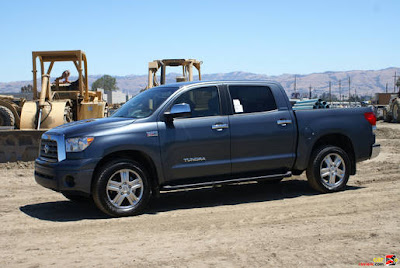
2007 Toyota Tundra

2007 Toyota Tundra

This vehicle is HUGE compared to what I drive, but I had a blast driving it anyway. The engine is massive, so I wanted to get it up to speed and see how it handled out on the open road. I was very pleasantly surprised. Even though the iForce 5.7L V8 engine eats little engines for snacks, it still gets decent gas mileage compared to other rides of its size. Acceleration is intuitive, as is deceleration…very nice transitions from fast to slow. (Vehicle specs page has the observed gas mileage for the Tundra test drive)

The interior was roomy, leathery, cushy and plush. The instrument panel for the entertainment was smooth and easy to reach and to read. The stock stereo system put out a decent sound, and even though we didn’t have any CDs to play, the radio was fine. You can also hook up your Bluetooth device, MP3 player, XM radio, or any plethora of iPod situations if you want to. The overhead storage has all sorts of fun nooks and crannies for your glasses, business cards, gum etc. Then we get to the console between the two enormous front seats: WOW!!! This is built for the full on home office! Hanging file folders! That come out in their own separate container! If you’re a realtor or a contractor, this is definitely the ride for you. Everything you need is within easy reach, including adjusting all your mirrors, the steering wheel, an information button that explains gas mileage, trip info, direction, etc. and adjusting your seats, which of course are heated. The air conditioning worked smashingly on a day with plenty of wind but we used it anyway.

The windows operate effectively…but one feature that rocked my little world, and reminded me of my parent’s 1969 Toyota Crown Wagon, was the rear window. It rolls down, ALL the way! Visions of Country Squires too! How cool is that? I mean, it’s great to be inside a truck cab, but the open rear window makes you think you’re in a convertible. I really liked that.

The rear seats recline sweetly, which is unusual in the cab of a truck-type vehicle. I sat back there and there’s gobs of room. You can place your drink cup anywhere you please, because there’s at least 10 or so places to do so. The rear seats also lay down flat, and plenty of areas to attach child seats if necessary. The seats are a 60/40 situation, making it great to transport your stuff that needs that sort of room.

One thing I have always liked about larger vehicles is the way the door sounds when it shuts. Beefy. This ride has that, and I loved it. Giant door handles, that mean business about opening or shutting them. The tailgate was a work of art: pneumatic lowering AND raising. No more hinge issues because of slamming! That was a pretty sweet feature.

Exterior-wise, this Toyota has spiffy 20 inch wheels, a great Slate Metallic color, ease of entry and exit even though I’m pretty short at five foot three. If there were one thing I would change about this Tundra, it would be the sight lines around those huge side view mirrors. One would really need to pay attention to the outside lines when necessary.

Overall I was exceptionally and pleasantly surprised with this vehicle and all the accoutrements it has to offer. I had a great time driving it!
source: reviews.carreview.com

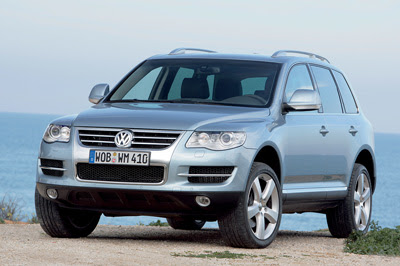
2008 Volkswagen Touareg Review

2008 Volkswagen Touareg

Touareg gets mild styling changes, more power, and extra standard features for 2008. This five-passenger 4-door wagon comes with all-wheel drive. The V6 model has 280 hp for '08, the V8 model 350; both are increases of 40 hp. (VW says a limited number of 2007 Touaregs were available with similar horsepower increases vs. 2006 models.) The V10 model's turbodiesel stays at 310 hp. All Touaregs have a 6-speed automatic transmission. Their AWD system is designed for off-roading and includes low-range gearing and a locking center differential; a locking rear differential is optional. ABS and an antiskid system are standard. So are front side airbags, curtain side airbags, and a sunroof. The V10's height-adjustable air suspension is optional for other models. Former options now standard include a power liftgate, power driver seat, and front and rear obstacle detection. Leather upholstery is optional on the V6 model and now standard on other Touaregs. Options include keyless entry/starting, navigation system, rearview camera, and heated rear seats. Changes to grille and taillamps are main styling updates, while 19-inch wheels replace 18s as standard on V8 and V10 models. Touareg was developed with Porsche, which offers its own version as the Cayenne. Touareg also lends its basic design to the Audi Q7 premium large SUV.

Acceleration

Touaregs are among the heaviest midsize SUVs, and the V6 labors in mountain driving and highway passing sprints; test example did 8.1 seconds 0-60 mph. The V8 version is no hot rod, but delivers better all-around acceleration, and is a necessity for towing; VW says 7.1 seconds 0-60.

The turbodiesel's monumental torque means brisk takeoffs and ready passing power; VW claims 7.2 seconds 0-60. On the downside, the V10 suffers occasional turbo lag, plus some diesel smoke and smell on cold starts.

Fuel Economy
No opportunity to measure with V6 or V8 versions, but 2007 test V10 averaged 18.3 mpg. VW recommends premium-grade fuel for the gasoline engines. The V10 requires ultra-low sulfur diesel fuel. Note that it's is unavailable in California and certain Northeastern states.

Ride Quality
Impressively rigid structure enhances comfort, with the base suspension and 17-inch tires furnishing the best ride. Bumps can intrude with 19-inch tires. Air suspension has three firmness settings, but only the middle one satisfies on-road. Air system's main asset is providing up to 11.8 inches of off-road clearance.

Steering/Handling/Braking
No match for lighter SUVs like the Acura MDX or Lexus RX, but Touareg always feels confident. The steering has a linear feel, but isn't as precise as it should be. Touaregs corner with good balance but marked body lean. The air suspension imparts a slightly more agile feel. A compact turning radius aids maneuvering, but some test V8 and V10 models suffered front driveline binding with the front wheels fully turned. Astute AWD system helped Touareg claw through severe conditions in dry-surface off-road tests.

Quietness
Rivals some upscale cars. Air suspension muffles tire thrum slightly better than conventional version, but 19-inch tires always more audible than smaller-size tires on coarse surfaces. Turbodiesel clatters at idle, but is otherwise muted, as are the gas engines. Wind rush is low for an SUV.

Controls
Gauges, dashboard and console look contemporary and upscale, but a proliferation of buttons and controls requires a preflight briefing. The climate system is a bit too low for easy driver use or view. The navigation system takes lots of study to master and governs too many audio functions, but its Global Positioning Satellite feature is useful off-road. Touareg matches any luxury SUV for quality of interior materials.

Room/Comfort/Driver Seating (front)
Great headroom, generous seat travel. Firm, comfortable seats. The standard tilt/telescope steering wheel helps drivers find an ideal position, but for some testers, parts of the gauges are blocked by the wheel rim. Step-in is higher vs. car-type SUVs, but isn't difficult. Hampering visibility to the front corners are large outside mirrors and to the rear are back-seat headrests; the rearview camera is a help. Some test Touaregs had slight windshield distortions.

Room/Comfort (rear)
The tallest riders may want a bit more head clearance. Foot space shrinks to marginal with the front seats more than halfway back, but knee room is never painfully tight. The seatback doesn't recline, but the cushion provides fine support. Narrow rear doorways hamper easy exit.

Cargo Room
The cargo bay handsomely finished, tall and wide rather than long, but spacious enough. The load floor is pretty high, though. The rear seatbacks lay flat, but not before an annoying ritual of flipping the lower cushions and removing the headrests. The cabin has abundant small-item storage.

Value within Class
Touareg is pricey for a Volkswagen, on par with Lexus and Mercedes-Benz rivals offering superior brand prestige, resale values, and customer care. But any Touareg rewards with first-class cabin decor, competent SUV road manners, and terrific off-road prowess.
source: consumerguideauto.howstuffworks.com

2008 Toyota Land Cruiser

2008 Toyota Land Cruiser

Hard to imagine, but the Toyota Land Cruiser has been around in one form or another since 1954, arriving in the United States four years after the original namesake was made in Japan.

When we say "one form or another," we're talking about some pretty radical shifts in shape and size. From its spartan Jeep-inspired origins, the Land Cruiser evolved into today's luxury monster with capacity for eight passengers and a price tag of $63,200.

By 1976, the still modest Land Cruiser was popular enough to inspire enthusiast Bob Garrett to create what became the Toyota Land Cruiser Association in Oxnard, Calif. The Southern California terrain of rugged mountain trails, bucolic farmland and scenic coastline made an ideal proving ground for the doughty SUV.

Today, it's less likely that an owner would take his or her Toyota luxury liner into unpaved harm's way. Hence, Toyota is touting the seventh generation as "King of the On-Road," as well as "King of the Off-Road."

Certainly, it will cost you a king's ransom to own one. The window sticker on the 2008 model arriving in showrooms in October represents a price increase of $6,985, or 12.4 percent over the previous model. Per pound, the price comes to a little over $11 for the nearly 3-ton vehicle.

And then there's the fuel economy, if you want to call it that. With full-time 4-wheel-drive, the Land Cruiser covers 13 miles per gallon in the city and 18 on the highway. Compared to the 1976 Jeep Wagoneer, that's not bad.

But let's face it, the buyer of the Land Cruiser is looking for brawn, not economy. And the 2008 model is long on brawn, with a 5.7-liter, 32-valve, 381-horsepower V8 that can pull an 8,500-pound trailer.

The full-time 4-wheel-drive system on the Land Cruiser operates through a six-speed automatic transmission that can be shifted like a manual. The underpinnings remain rugged, and Toyota has enhanced the big brute's ability to traverse trails while enhancing the interior comforts.

A new high-mount double-wishbone independent front suspension and four-link rear suspension with a solid live axle are designed for better performance on-road or off. A Kinetic Dynamic Suspension System (those KDSS), varies the stiffness of the anti-sway bars according to conditions. The 18-inch alloy wheels are clad in mud-and-snow steel belted radial tires.

The Cruiser is also equipped with a Crawl Control system that modulates momentum in downhill maneuvers that require the driver's full visual attention. With the transfer case shifted into low range, Crawl controls engine speed and output, along with braking force, to propel the vehicle forward or in reverse at one of three low-speed settings.

Other electronic safety systems include power, vented-disc brakes with multi-terrain anti-lock braking system. Braking force and torque are apportioned to each wheel by Electronic Brake-force Distribution, Brake Assist, Active Traction Control and Vehicle Stability Control. Or, ABSEBDBAATCVSC for short.

Panels behind the front bumper, extending under the engine and behind the rear wheels protect the engine and transmission and to help the vehicle survive rocky terrain. The panels also smooth airflow under the vehicle to reduce drag and turbulence at high speeds.

Seating is designed for two in the front, and three each in the second and third rows while leaving plenty of room for cargo in the back.

A new multi-zone air conditioning eliminates the conventional switching operation. Passengers get four-zone independent control with 28 air vents. First and second-row passengers have access to individual climate control.

The instrument panel features a set of bright Optitron gauges with clear turquoise illumination. Beneath the main gauges is a display that shows gear selection, odometer, tripmeter, fuel consumption, individual tire pressure for all five tires and cruising range.

The center console features a gate-type shifter with sequential shift mode operation, the parking brake, a storage box with several compartments and a removable tray, universal mini-jack port and cupholders.

A one-touch tumble release on the second-row seats clears a path for third-row passengers. The second-row seats now slide forward and aft 4.1 inches for more comfort and cargo storage.

The 2008 Cruiser has many an air bag to protect its passengers. In addition to the front air bags are: seat-mounted side airbags; second row seat-mounted inflatables; three-row roll-sensing side curtain airbags with roll-sensing cutoff switch; and driver and front passenger knee airbags.

While the new Land Cruiser faces plenty of peril at the pump, it carries excellent survival skills in the form of Toyota's durable reputation for reliability and quality.

Jim Lentz, executive vice president, Toyota Motor Sales, U.S.A., Inc.

"For more than 50 years, the Land Cruiser has delivered on-and-off-road capability and performance, and this generation will raise the ante for overall capability and comfort," said Jim Lentz, executive vice president, Toyota Motor Sales, U.S.A.
source: info.detnews.com

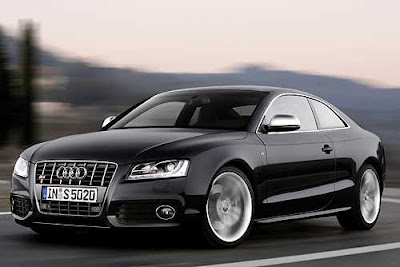
2008 Audi S5

2008 Audi S5

Cops should go easy on Audi S5 owners.

When a new S5 driver asks, "Really, I was going 98 mph?" or says, "Yes, I knew I was going fast, but not thatfast," he will be telling the truth.

From behind the wheel of the 2008 Audi S5, the rest of the world slows down. Speeding becomes more of an innocent act than a traffic infraction. Free passes should come in the glove box of this $50,000 coupe, reading, "Forgive me officer, for I know not what I drive."

And most people hopping into the S5 really won't know what they're about to take for a spin. The luxurious interior, sleek styling and nearly silent ride mask the beast in this machine.

The performance version of the Audi's new A5, the S5 leaves aggressiveness under the hood. Its sophisticated looks hint at power but never boast. It's like an old veteran football player scoring a touchdown and handing the ball to the ref. No showboating, no smack talking, just confidence.

And like football, car design is a game of inches: The 19-inch wheels push out to the car's corners, stretching the wheelbase to 108 inches. With an overall length of 182 inches, the S5 remains very low (53.9 inches tall) but still very wide (73 inches) -- all-important measurements in a car's performance. It is a few inches wider than its German competitors, such as the turbo-charged BMW 3-Series coupe and the more powerful Mercedes-Benz CLK 550.

Clean, chiseled lines flow from the front to the back along the coupe's shoulder. The fenders bulge out slightly, suggesting speed but never giving away its secrets. The roofline curves elegantly to the back, tasteful and artistic. Pure Audi -- you know the S5 belongs in the German carmaker's family, but you're not sure where. Somehow the silver mirrors, four tailpipes, LED trim on the headlights and other S5 cues speak to your emotions in a primal "I gotta go fast" kind of way.

Even the front end, with its small S5 badging and oversized front grille denotes power but never shouts. There's nothing in-your-face with this car. It teases you with its striking looks but maintains its serious Fatherland composure.

Built to appreciate

Other drivers won't have much time to admire the S5 though, because it blasts its way through traffic.

Audi's 4.2-liter FSI V8 pumps 354-horses and 325-foot-pounds of torque through the 3,792-pound S5. It's a strong, magnificent heart. From a standstill, the S5 hits 60 mph in 4.9 seconds and its full torque kicks in at 3,500 rpm, which lets you feel the car's power through acceleration instead of just at the high rpm end.

While many drivers may not understand torque curves -- or what happens when Audi designs its transaxle so it can push the engine back to provide better balance, or the performance advantages of having all-wheel drive with 60 percent of the car's power in the rear axle -- every driver will feel it.

It's a surgical scalpel precisely cutting up every road it crosses. The steering is exact, even while accelerating through tight corners, and at high speeds, it's nicely weighted. The ride is clean and smooth, as the tight suspension holds corners but cleans up bumps along Interstate 75.

The six-speed manual transmission is silky, clicking through each gear with short, fast throws. No automatic transmission is offered, a move I applaud because it means if you want to drive the S5, you first need to learn how to drive.

It's the total combination of ride, handling and power that create the speed deception. You never notice it until you're washed in red and blue lights trying to catch up.

Putting the driver first

The final piece de résistance is the inside of the S5. It's immaculate.

Audi continues to outshine other luxury sports cars with well-designed and executed interiors. Audi designers note comfort by shoulder room, and my test vehicle, complete with S5 sport seats, offered 54.3 inches of shoulder room. Designed for two people, the second row feels cramped and lacks head room because of the sloping roof. But it's comfortable enough for around-the-town jaunts. Children would be comfortable, as long as they don't mind a modest view, thanks to the S5's high beltline.

My European spec test vehicle came with Magnum Red premium leather seats, the boldest design statement in the vehicle. It's just the right amount of attitude to go with this Audi, though there are three other interior color choices that are much more subtle. Between the eight-way adjustable seat and the telescoping and tilting racing steering wheel, it's easy to find the perfect driving position. Well, not that easy, with so many choices, I became the Goldie Locks of seat positions, tweaking this and adjusting that until it was just right.

The instrument panel is designed for the driver and no one else. Every gauge is oriented toward the driver. The navigation screen, which also operates the stereo, works off a single knob between the driver and passenger seats, known by Audi as the MMI, or Multi Media Interface. It takes a day or two to get used to the different menu items, but it's easy once you get the hang of it. Ultimately, the system lets you keep your eyes on the road longer without fumbling for controls.

The best Audi offers

One failure of the S5 is its huge optional sunroof. It only tilts ajar instead of actually opening. Audi decided to do this because it would have had to either make the roof thicker or have an ugly piece of glass hanging next to an open hole.

Audi says it just couldn't deface the car's beautiful profile with some chunk of glass. It's the kind of logic an enthusiast or German unquestionably understands.

An American, however, may not appreciate having a giant window to the world that doesn't open. Even though they may never use it, the fact that they can't is more frustrating than a 105 mph breeze blasting down your neck.

But that's a minor misgiving, no different than not having cruise control on this vehicle -- why on Earth would you notwant to drive this car every second you're in it? That's like making the perfect banana split and letting someone else eat it.

This machine brings out the best Audi offers: Sophisticated but understated design, superior performance through science and technology and a passion for the open road only truly understood in a country with no speed limits.

As for us Americans, we may be able to buy into that passion, but we need to remember our roads still have limits.

And when an officer taps on the window of your S5 and asks you for your license and registration, you really shouldn't be surprised.
source: info.detnews.com