Monday, October 8, 2007

Opel Corsa

After four generations, some effort has finally been put into giving the Corsa sorely needed panache, says Motoring Editor Michael McAleer

The first three generations of the Opel Corsa had a rather varied fan base. On one side you had eager young car enthusiasts, attracted by the entry-level prices and the fact the design was a blank canvas, there for you to do your best to make it look sporting.

On the other side you had the earnest older motorist, "not looking for anything fancy" who sought out the Corsa for the weekly shop and the run over to Auntie Mary for bridge on Tuesday.

The Corsa served each constituency well. However, the competition has started to heat up. Toyota are currently top of the sales league here with its Yaris, Renault's Clio still pulls in the crowds and Peugeot's 206 has done remarkably well, and the new 207 should continue that trend, its lack of 1-litre engines aside.

Then there's the new Fiat Punto, the ever-popular Nissan Micra and our favourite in this class, the new Suzuki Swift.

Corsa knew it had to seriously beef up its effort to stay with the pack. So far, after several hours in the car in Germany, Opel seems up to the challenge.

Design has played an increasingly important role in these small cars and the progression through the generations of Corsas tells its own tale.

The first was boxy, the second softer, the third bigger and arguably this fourth generation is the first time any great effort has been put into adding some panache. Indeed, it bears some similarities to the new Clio from certain angles.

The car is bigger than any of its predecessors, partly because of increased customer demand and partly down to new pedestrian safety regulations. These latter requirements meant the bonnet had to be raised in this version by 40mm, and to keep some form of consistency the height increase impacted on every other dimension.

The end result is a more coupe look to what is effectively a small family car. Due to pushing the a-pillar (the one at the windscreen) forward, Opel was able to rake the windscreen more and give a more sweeping feel to the roofline.

There's a familial look to the new car as well, with several features - notably the window line - taken from the new Astra range. The end result is a car that actually looks more compact than it is inside. That's a neat trick, considering several buyers in this market have complained about the likes of the new Peugeot 207 and Renault Clio looking too big to qualify for the small car segment.

While the exterior is meant to catch the eye, those that buy will obviously spend most of their time in the cabin.

Here Opel has really excelled. The soft plastic dash is a notable feature, as is a new-look central console in either piano black or opaque white plastic with backlit switchgear. Gone is the vertical tower of buttons that features in the Vectra and Astra. This is a far more intuitive and stylish layout, closer to the likes of the Toyota Yaris than anything else from Opel. Overall, our favourite features were the circular air vents that set off the fascia, the soft-touch dashboard and the feeling of spaciousness thanks to the sweeping windscreen.

Seating is comfortable, and the five-door version is well able to cope with four full-size adults. In the sportier looking three-door version there is also plenty of legroom and access to the back seats doesn't require any of you to be double jointed at the hip.

Our 6 ft-plus colleague had no problem in the front and managed to sit in the back behind his own seat without having to eat his knees. The only real problem in the back of the three-door is that the sweeping lines of the windows means visibility is rather limited and the cabin can seem rather dark.

For the driver, there's a similar issue with the sweeping window lines and the rather high-set rear window may not suit everyone, particularly when reversing into a tight parking space. This is not helped by the wider body panels, such as the extended wheel arches, which also may take a knock if drivers aren't careful reversing.

The good news is that bootspace is comparable with any of the competition. The test cars we had featured run-flat tyres, but this will not be a feature in Ireland.

Some also had Opel's new Flexifit bike storage system. This comprises a set of arms that retract from the rear bumper and safely hold a couple of bicycles to the rear of the car. As with Opel's other flexi systems - such as its flex-seven system in the Zafira - it's very simple to use, though you do need a little elbow grease to get all the pieces in position. Then again, if you're a fit cyclist, it won't be a problem.

The bad news is that it costs a hefty ˆ900 as an option, and also means you lose the spare wheel, replaced with a puncture repair system (for the car, not the bicycle).

The engine range starts with the 1-litre 59 bhp petrol - good news for Opel considering competitors like Peugeot has dropped its 1-litre entrant.

Next up is the 1.2-litre 79 bhp petrol and 1.4-litre 89 bhp. All petrol versions come with five-speed manual transmissions. There's a diesel offering as well, a 1.3-litre CDTi with either 74 bhp or 89 bhp.

We tested all engines apart from the 1-litre version and were surprised to find our favourite of the bunch was the 1.2-litre petrol. While the car has added some weight, the five-speed transmission seems best suited to this version and the end result is a sprightly, rather eager performance.

That's particularly the case over the 1.4-litre version where the power lagged between second and third gears even on slight inclines.

Opel has done a good job with the car's handling as well. While it's not as nimble as the likes of the Suzuki and lacks the ultra-light city steering control of the likes of the Clio or Punto, you do feel in more control and it's well weighted. The ride is comfortable, though on rough surfaces you do feel the bumps, particularly on the Sxi version with sports suspension.

In such a competitive market, potential buyers should look around before they purchase, but the new Corsa should be included in the final test line-up. Opel has not managed to keep entry-level prices below the ˆ15,000, but they are competitive with key rivals, starting at ˆ15,495 for the 1.2-litre 3-door Life version and ˆ15,395 for the 1-litre 5-door.

The end result of Opel's efforts means a far more dynamic look to the Corsa range than ever before. For the earnest elders it will add some style to their motoring life, while the young image conscious buyers may just find they've less work to do in making the car look more sporting. Both constituencies should welcome the new model with open arms.

source: www.findmore.org

Daewoo Leganza Specifications

Daewoo Leganza Specifications

Engine
2.2L DOHC 16-valve D-TEC I-4 engine w/131 hp @ 5200 rpm &
148 lb.-ft. of torque @ 2800 rpm, Independent MacPherson strut-type front suspension, Independent multi-link-type rear suspension, Power-assisted steering, Speed-sensitive power-assisted steering (SSPS), Power-assisted 4-wheel disc brakes w/ventilated front rotors, Fuel cut-off switch w/reset button
Anti-theft alarm system w/remote keyless entry P1, Gas strut hood supports, Steel side door guard beams, Full-size spare tire
Single horn
DriveTrain
5-speed manual transmission
4-speed electronically-controlled automatic transmission w/lock-up converter
Exterior Features
15-inch steel wheels w/full wheel covers
P205/60R15 all season tires
15-inch alloy wheels (set of 5)
Multi-facet reflector and projection-type halogen headlights
Integrated front fog lights
Dual body-color heated power outside rearview mirrors
Front Seats
2 passanger seating, Reclining front bucket seats w/adj. driver's seat height and lumbar support S S
Front passenger lumbar support - P2
Bitmap Front headrests with height and tilt adjustment
Rear Seats
3 passanger seating, 60/40 split fold-down rear seatback w/center armrest S S, Child safety rear door locks
Power Features
Power windows w/driver's window auto-down
Power door locks, Power tilt-and-slide glass moonroof, Power antenna, 6-way adjustable power driver's seat
Convenience
Dual illuminated sunvisor vanity mirrors S, Front map lights
Door courtesy lights, Digital clock ,Tachometer, Lockable glove compartment w/illumination, Ignition switch illumination
Coin storage tray, Fully carpeted and trimmed trunk
Trunk light, Rear window defroster with timer, Day/night rearview mirror Warning chimes for driver's safety belt, headlamp-on, key-in-ignition, and door open.
source: allautoreviews.com

Sunday, October 7, 2007

2007 Honda Civic

2007 Honda Civic

A lot of words come to mind when thinking of Honda four-doors: practical, reliable, dependable, and mostly boring. There’s nothing wrong with making that type of vehicle….Honda has sold millions of them. But what do you do if you’re looking for a little sport in an economical and practical four-door and you don’t want to break the bank. Well, you could start off by looking at the four-door Honda Civic Si.

Conditions for the test drive were incredible (isn’t the Bay Area great), with clear skies and eighty to ninety-degree temperatures. I drove a combination of highway, city surface streets, and winding back roads. I think the conditions in which we tested the car will be consistent with how most people will drive the car.

On a side note, I would like to sincerely thank a good friend for allowing us to drive his brand new Civic with less than 1,300 miles on it. Thanks for trusting us with your new ride, Jason.

Build
This is the 2007 Honda Civic Si Sedan. It comes equipped with a 4 cylinder 2.0 liter motor that pumps out 197 horsepower at 7800 RPM and 139 pound-feet of torque at 6100 RPM. The motor is mated to a six-speed manual transmission. Power is delivered to the road via a front-wheel drive system with a limited slip differential ending in 17 inch, split five spoke alloy rims shod with Michelin Pilot P215/45R17 tires.

Fit and finish is normal Honda excellent. The body panels align properly and the doors close securely.

Interior Comfort and Ergonomics
The Si has a very modern looking interior, with flowing lines and an intelligent design. The instruments are easily visible behind a three spoke steering wheel and the controls are easy to understand and use. However, I did find one area of major concern. The speedometer is placed at the top of a double-stack instrument cluster and is almost impossible to read under direct sunlight. While this design is very distinctive and attractive, it loses points for practicality and is a little disappointing considering normally excellent Honda engineering.

The cloth covered seats are firm and have side bolsters that do a commendable job keeping you in place during spirited driving. This makes for a fairly sporting seat that maintains an appreciable comfort factor. The cloth material which adorns the seats and other surface areas of the interior is very attractive, but acts like Velcro with hair and other debris. Keeping this interior clean will require a little more effort than leather or vinyl. Rear seat leg room is adequate, but becomes a bit crunched when the front seats are place in the full rear position.

The rear seats fold down to provide additional cargo area, but if you want to carry bicycles or other large items, a roof rack will be in order.

It appears that Honda may have left out a little insulation in the interests of keeping this car light. It’s not exactly noisy, just a little more noisy than most cars at this price level.

Performance
The Civic Si boasts a197 horsepower i-VTEC engine with 139 pound-feet of torque….yaaawn. Where’s the sport in this Civic Si? Wait a minute,…I’m starting to feel something. There it is, just had to get over 6000 rpm to find it. All kidding aside, this is a very nice little motor. Smooth, high-revving, and no quit. This motor is well-served by its six speed manual. Stir the gear-box frequently and keep the RPMs over 6000 and this is a fun ride. This car makes you want to accelerate just to hear that great exhaust note. Not bad at all for a normally aspirated 2.0 liter.

I did notice that the shifting on this vehicle felt a bit vague. I don’t think there’s anything wrong with the transmission, it could just use a better shifting linkage that would allow more positive shifts.

Handling
Honda did a good job with the handling and ride quality of this vehicle. The ride itself is firm without being harsh or jarring. Handling is confidence inspiring and the Michelins are predictable and forgiving. There is some minor body roll during left to right transitions, but nothing that would prevent you from enjoying some spirited driving. I tested this vehicle on Calaveras Road, which sports some very narrow, tight turns, and very little room for error. This is the same road on which I tested the Ford Shelby Mustang several weeks back. The Honda is much easier to drive fast under these conditions. Given the same driver, the Honda would beat the Mustang on this road. Braking power is good and I experienced no fade under our limited test conditions.

Styling
Honda Civic sedans have always been fairly boxy in nature and it seems that Honda has always been satisfied to leave it to the aftermarket to improve this car’s looks. Not the case with this Civic sedan. The exterior design is smooth and flowing. And the Si package looks like it originated in the aftermarket. Nothing too crazy, but eye-catching none-the-less. I think they did a great job with the exterior design of this vehicle. It looks very modern and should age well.

Value
The MSRP for this vehicle is $22,085. If this vehicle is as reliable as other Civics have been through the years, it will be a great value. Well designed, sporting, good looks, and fairly practical.
source: reviews.carreview.com

2007 Toyota Tundra

2007 Toyota Tundra

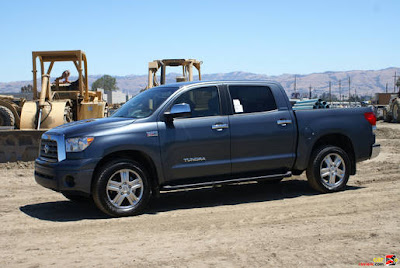
This vehicle is HUGE compared to what I drive, but I had a blast driving it anyway. The engine is massive, so I wanted to get it up to speed and see how it handled out on the open road. I was very pleasantly surprised. Even though the iForce 5.7L V8 engine eats little engines for snacks, it still gets decent gas mileage compared to other rides of its size. Acceleration is intuitive, as is deceleration…very nice transitions from fast to slow. (Vehicle specs page has the observed gas mileage for the Tundra test drive)

The interior was roomy, leathery, cushy and plush. The instrument panel for the entertainment was smooth and easy to reach and to read. The stock stereo system put out a decent sound, and even though we didn’t have any CDs to play, the radio was fine. You can also hook up your Bluetooth device, MP3 player, XM radio, or any plethora of iPod situations if you want to. The overhead storage has all sorts of fun nooks and crannies for your glasses, business cards, gum etc. Then we get to the console between the two enormous front seats: WOW!!! This is built for the full on home office! Hanging file folders! That come out in their own separate container! If you’re a realtor or a contractor, this is definitely the ride for you. Everything you need is within easy reach, including adjusting all your mirrors, the steering wheel, an information button that explains gas mileage, trip info, direction, etc. and adjusting your seats, which of course are heated. The air conditioning worked smashingly on a day with plenty of wind but we used it anyway.

The windows operate effectively…but one feature that rocked my little world, and reminded me of my parent’s 1969 Toyota Crown Wagon, was the rear window. It rolls down, ALL the way! Visions of Country Squires too! How cool is that? I mean, it’s great to be inside a truck cab, but the open rear window makes you think you’re in a convertible. I really liked that.

The rear seats recline sweetly, which is unusual in the cab of a truck-type vehicle. I sat back there and there’s gobs of room. You can place your drink cup anywhere you please, because there’s at least 10 or so places to do so. The rear seats also lay down flat, and plenty of areas to attach child seats if necessary. The seats are a 60/40 situation, making it great to transport your stuff that needs that sort of room.

One thing I have always liked about larger vehicles is the way the door sounds when it shuts. Beefy. This ride has that, and I loved it. Giant door handles, that mean business about opening or shutting them. The tailgate was a work of art: pneumatic lowering AND raising. No more hinge issues because of slamming! That was a pretty sweet feature.

Exterior-wise, this Toyota has spiffy 20 inch wheels, a great Slate Metallic color, ease of entry and exit even though I’m pretty short at five foot three. If there were one thing I would change about this Tundra, it would be the sight lines around those huge side view mirrors. One would really need to pay attention to the outside lines when necessary.

Overall I was exceptionally and pleasantly surprised with this vehicle and all the accoutrements it has to offer. I had a great time driving it!
source: reviews.carreview.com

2008 Volkswagen Touareg Review

2008 Volkswagen Touareg

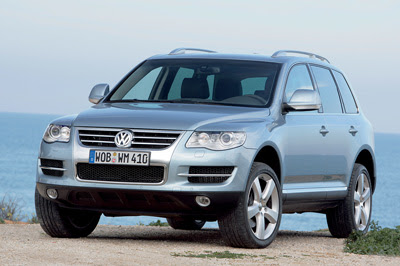
Touareg gets mild styling changes, more power, and extra standard features for 2008. This five-passenger 4-door wagon comes with all-wheel drive. The V6 model has 280 hp for '08, the V8 model 350; both are increases of 40 hp. (VW says a limited number of 2007 Touaregs were available with similar horsepower increases vs. 2006 models.) The V10 model's turbodiesel stays at 310 hp. All Touaregs have a 6-speed automatic transmission. Their AWD system is designed for off-roading and includes low-range gearing and a locking center differential; a locking rear differential is optional. ABS and an antiskid system are standard. So are front side airbags, curtain side airbags, and a sunroof. The V10's height-adjustable air suspension is optional for other models. Former options now standard include a power liftgate, power driver seat, and front and rear obstacle detection. Leather upholstery is optional on the V6 model and now standard on other Touaregs. Options include keyless entry/starting, navigation system, rearview camera, and heated rear seats. Changes to grille and taillamps are main styling updates, while 19-inch wheels replace 18s as standard on V8 and V10 models. Touareg was developed with Porsche, which offers its own version as the Cayenne. Touareg also lends its basic design to the Audi Q7 premium large SUV.

Acceleration

Touaregs are among the heaviest midsize SUVs, and the V6 labors in mountain driving and highway passing sprints; test example did 8.1 seconds 0-60 mph. The V8 version is no hot rod, but delivers better all-around acceleration, and is a necessity for towing; VW says 7.1 seconds 0-60.

The turbodiesel's monumental torque means brisk takeoffs and ready passing power; VW claims 7.2 seconds 0-60. On the downside, the V10 suffers occasional turbo lag, plus some diesel smoke and smell on cold starts.

Fuel Economy
No opportunity to measure with V6 or V8 versions, but 2007 test V10 averaged 18.3 mpg. VW recommends premium-grade fuel for the gasoline engines. The V10 requires ultra-low sulfur diesel fuel. Note that it's is unavailable in California and certain Northeastern states.

Ride Quality
Impressively rigid structure enhances comfort, with the base suspension and 17-inch tires furnishing the best ride. Bumps can intrude with 19-inch tires. Air suspension has three firmness settings, but only the middle one satisfies on-road. Air system's main asset is providing up to 11.8 inches of off-road clearance.

Steering/Handling/Braking
No match for lighter SUVs like the Acura MDX or Lexus RX, but Touareg always feels confident. The steering has a linear feel, but isn't as precise as it should be. Touaregs corner with good balance but marked body lean. The air suspension imparts a slightly more agile feel. A compact turning radius aids maneuvering, but some test V8 and V10 models suffered front driveline binding with the front wheels fully turned. Astute AWD system helped Touareg claw through severe conditions in dry-surface off-road tests.

Quietness
Rivals some upscale cars. Air suspension muffles tire thrum slightly better than conventional version, but 19-inch tires always more audible than smaller-size tires on coarse surfaces. Turbodiesel clatters at idle, but is otherwise muted, as are the gas engines. Wind rush is low for an SUV.

Controls
Gauges, dashboard and console look contemporary and upscale, but a proliferation of buttons and controls requires a preflight briefing. The climate system is a bit too low for easy driver use or view. The navigation system takes lots of study to master and governs too many audio functions, but its Global Positioning Satellite feature is useful off-road. Touareg matches any luxury SUV for quality of interior materials.

Room/Comfort/Driver Seating (front)
Great headroom, generous seat travel. Firm, comfortable seats. The standard tilt/telescope steering wheel helps drivers find an ideal position, but for some testers, parts of the gauges are blocked by the wheel rim. Step-in is higher vs. car-type SUVs, but isn't difficult. Hampering visibility to the front corners are large outside mirrors and to the rear are back-seat headrests; the rearview camera is a help. Some test Touaregs had slight windshield distortions.

Room/Comfort (rear)
The tallest riders may want a bit more head clearance. Foot space shrinks to marginal with the front seats more than halfway back, but knee room is never painfully tight. The seatback doesn't recline, but the cushion provides fine support. Narrow rear doorways hamper easy exit.

Cargo Room
The cargo bay handsomely finished, tall and wide rather than long, but spacious enough. The load floor is pretty high, though. The rear seatbacks lay flat, but not before an annoying ritual of flipping the lower cushions and removing the headrests. The cabin has abundant small-item storage.

Value within Class
Touareg is pricey for a Volkswagen, on par with Lexus and Mercedes-Benz rivals offering superior brand prestige, resale values, and customer care. But any Touareg rewards with first-class cabin decor, competent SUV road manners, and terrific off-road prowess.
source: consumerguideauto.howstuffworks.com